Rechenintensive KI kann unter Last bis zu 20-mal mehr Strom verbrauchen als im Leerlauf. Was, wenn man solche Rechenaufgaben gezielt dann erledigt, wenn gerade genügend grüne Energie zur Verfügung steht? Genau das erforschen wir im Projekt PRO-LAB im Rahmen des interdisziplinären Energieforschungslabors an der Universität Bremen.
Das Ziel: eine intelligente Steuerung, die KI-Aufgaben genau dann erledigt, wenn erneuerbare Energie im Überschuss vorhanden ist, etwa aus den Photovoltaikanlagen am eigenen Standort. Dafür führt das System laufend Energiedaten, Informationen zu Kühlung und Lüftung sowie Wetterdaten zusammen und plant die Rechenprozesse entsprechend. So lassen sich Lastspitzen vermeiden, Energiebedarfe senken und CO₂-Emissionen reduzieren.
Als Basis dient unser nach Green-IT-Rechenzentrum. Die Erkenntnisse sollen künftig die Effizienz von Recheninfrastrukturen steigern und damit zu den Klimazielen des Landes Bremen beitragen.
Das Projekt wird kofinanziert von der Europäischen Union und gefördert von der Senatorin für Umwelt, Klima und Wissenschaft und der BAB – Bremer Aufbau-Bank.
Der Luftraum für Drohnen wird digital und jemand muss ihn sicher koordinieren. Genau hier setzt unser Projekt UAS-L-USSP HB an: In Bremen bauen wir ein prototypisches System für einen künftigen U-Space Service Provider (USSP) auf. Ziel ist es, die UAS-Leitstelle Bremen zur Zertifizierungsreife zu führen und die sichere Integration unbemannter Luftfahrzeuge gemäß den EU-Verordnungen 2019/945, 2019/947 und 2021/664 in den bestehenden Luftverkehr zu ermöglichen.
Kern des Vorhabens ist die Umsetzung aller sechs U-Space-Dienste: Netzidentifizierung, Geosensibilisierung, Fluggenehmigung inklusive „strategic deconfliction”, Verkehrsinformation, Konformitätsüberwachung und Wetterinformation. Dafür verarbeiten wir Verkehrsdaten (u. a. ADS-B, FLARM, Mode-C/S) und Wetterdaten des Deutschen Wetterdienstes in automatisierten Entscheidungsabläufen mit einem besonderen Fokus auf dynamische Risikobewertung und die frühzeitige Erkennung möglicher Konflikte. Entwickelt wird die Leitstelle in unserem eigenen Green-IT-Rechenzentrum.
Erprobt wird das System zunächst in einer Simulationsumgebung und anschließend in einer realitätsnahen Beispielmission. Unter anderem am Offshore Drone Campus Cuxhaven, wo das Fraunhofer IFAM als Modellkunde mit Offshore-Fokus praxisnahe Anforderungen einbringt. So legen wir als künftiger USSP das Fundament für einen automatisierten, skalierbaren Drohnenbetrieb. Für Anwendungen in Logistik, Inspektion und bei Behörden und Organisationen mit Sicherheitsaufgaben (BOS).
Das Projekt wird kofinanziert von der Europäischen Union und gefördert von der Senatorin für Wirtschaft, Häfen und Transformation und BAB – Bremer Aufbau-Bank.
Am 7. April hatten wir Staatsrat Jan Fries der Senatorin für Umwelt, Klima und Wissenschaft und Martin Schulze, Leiter der Geschäftsstelle Umwelt Unternehmen beim RKW Bremen, bei uns am Standort am Airport Bremen zu Gast. Im Rahmen eines Unternehmensbesuchs informierten sich beide über unsere Arbeit an der Schnittstelle von IT-Dienstleistungen und unbemannter Luftfahrt.
Staatsrat Jan Fries betonte beim Besuch die Bedeutung von Unternehmen wie b.r.m. IT & Aerospace für die nachhaltige Transformation der Bremer Wirtschaft: Hier werde nicht lange geredet, sondern gemacht. Gerade im Mittelstand entstünden so praktische Lösungen, die Klima und Wirtschaft zusammenbringen.
Als Mitglied der Partnerschaft Umwelt Unternehmen im Land Bremen verbindet uns mit dem RKW Bremen eine langjährige Zusammenarbeit. Bereits bei der Entwicklung der Grundlagen für den Blauen Engel in Rechenzentren haben wir gemeinsam mit dem RKW wichtige Vorarbeit geleistet.
Wir bedanken uns bei Staatsrat Jan Fries und Martin Schulze für den Besuch und den wertvollen Austausch.
Die Zukunftskonferenz “Nachhaltig erfolgreich: Mittelstand mit Zukunft” in Bremen im vergangenen Jahr stellte die entscheidende Frage: Wie wird Nachhaltigkeit zum Wettbewerbsvorteil?
Harald Rossol zeigte am Beispiel von b.r.m., dass die Antwort in einem einfachen Prinzip liegt: „Effizienz ist, dasselbe Ergebnis mit erheblich reduzierten Ressourcen zu erreichen.” Im Rechenzentrum bedeutet das konkret bis zu 60% weniger Energiekosten, erreicht durch den konsequenten Einsatz von Servervirtualisierung nach dem Prinzip der Systemvermeidung und intelligente Warm-/Kaltgang-Einhausung, die Temperaturvermischung verhindert.
Nachhaltigkeit in der Luftfahrt
Diesen nachhaltigen Ansatz übertragen wir auch auf unsere Arbeit in der unbemannten Luftfahrt. Mit unserem U-Space Reallabor Nord-Westdeutschland und der UAS-Leitstelle Bremen entwickeln wir zukunftsweisende Lösungen für die sichere Integration unbemannter Flugsysteme in den Luftraum. Drohnen übernehmen heute schon Aufgaben im Umweltschutz, in der Offshore-Logistik und bei der Infrastrukturüberwachung, effizienter und ressourcenschonender als herkömmliche Methoden. Ob IT-Service oder UAS-Technologie, unsere Haltung bleibt unverändert: “nachhaltig, verlässlich, norddeutsch klar.”
Die Konferenz bestätigte: Unternehmen, die ökologische Verantwortung mit wirtschaftlichem Erfolg und Innovation verbinden, sind die Gewinner von morgen.
Cloud vs. Private Cloud vs. On-Premise: Warum On-Premise eine moderne Wahl sein kann
Unternehmen stehen vor der Entscheidung, ob sie ihre IT-Infrastruktur in der Cloud, in einer Private Cloud oder On-Premise betreiben sollen. Es gibt zahlreiche Gründe, warum On-Premise-Infrastrukturen auch heute noch eine moderne und strategisch wertvolle Wahl sein können.
On-Premise: Maximale Kontrolle, Sicherheit und Anpassungsfähigkeit
On-Premise-Lösungen ermöglichen es Unternehmen, ihre Daten und Anwendungen auf eigenen Servern zu betreiben, was maximale Kontrolle und Datensicherheit bietet. Besonders in Zeiten zunehmender Cyberangriffe und strengerer Datenschutzgesetze ist dies ein unschätzbarer Vorteil. Unternehmen können ihre Infrastruktur optimieren und Sicherheitsprotokolle implementieren, die genau auf ihre spezifischen Bedürfnisse zugeschnitten sind. Die Unabhängigkeit von externen Anbietern erlaubt es ihnen, flexibel und schnell auf neue Sicherheitsanforderungen zu reagieren.
Ein oft übersehener Vorteil von On-Premise-Lösungen ist die Möglichkeit, maßgeschneiderte IT-Lösungen zu entwickeln, die spezielle Geschäftsprozesse unterstützen. Während Cloud-Lösungen standardisierte Dienste anbieten, behalten Unternehmen in einer On-Premise-Umgebung die volle Kontrolle über ihre IT-Ressourcen, ohne Kompromisse oder Einschränkungen durch Drittanbieter eingehen zu müssen.
Cloud-Lösungen: Flexibilität auf Abruf, aber mit Kompromissen
Public Clouds von Anbietern wie AWS, Azure oder Google Cloud ermöglichen eine schnelle Skalierbarkeit und Flexibilität. Es gibt eine Pay-per-Use-Option, die auf den ersten Blick kostengünstig erscheint. Allerdings bringt die Public Cloud auch Abhängigkeiten und potenzielle Risiken mit sich, wie etwa in Bezug auf Datenhoheit und Compliance.
Private Cloud: Ein hybrider Ansatz
Die Private Cloud kombiniert die Vorteile von On-Premise und Public Cloud. Sie bietet eine dedizierte IT-Infrastruktur, entweder vor Ort oder in einem Rechenzentrum eines Anbieters, was mehr Kontrolle bietet als die Public Cloud. Dennoch bleibt auch hier eine Abhängigkeit vom Anbieter bestehen, und die Flexibilität ist oft geringer als bei vollständig eigenverwalteten Lösungen.
Fazit: On-Premise als zukunftssichere Strategie
Obwohl die Cloud viele Vorteile bietet, sollten Unternehmen die Vorteile von On-Premise-Lösungen nicht unterschätzen. Mit höchster Kontrolle, Anpassbarkeit und Sicherheit kann eine On-Premise-Infrastruktur eine innovative Wahl für Unternehmen sein, die ihre IT-Strategie maßgeschneidert und unabhängig gestalten möchten. Besonders für Unternehmen mit strengen Compliance-Anforderungen und dem Wunsch nach langfristiger Kostentransparenz stellt On-Premise eine moderne, strategische Entscheidung dar.
Am Freitag den 09.05. findet das „Praxisforum Digitalisierung“ der Wirtschaftsförderung Landkreis Oldenburg statt.
Ganztägige Demonstratoren werden von IT-Experten präsentiert. Networking, Keynotes und natürlich Fachvorträge begleiten durch den Tag. Auch unser Managing Partner, Herr Harald Rossol ist mit dem Thema „Von der unbemannten Luftfahrt mit Drohnen bis zum IT-Service“ Teil der Vortragenden. Von RZ-Betrieb über Cybersecurity und IT-Service, der unbemannten Luftfahrt, über die UAS-Leitstelle Bremen (USSP) bis hin zu den Drone Days 2025 ist hier ein spannender und informativer Vortrag zu erwarten.
Am 30.10. 2024 fand der 1. Kongress der Initiative Powerhouse Nord statt. Die b.r.m. IT & Aerospace freute sich besonders zur Vernetzung zwischen Unbemannter Luftfahrt und den Herausforderungen für den Energiesektor beizutragen. Neben vielen informativen Gesprächen und dem Knüpfen neuer Kontakte konnte unser Geschäftsführer Markus Rossol in einem kurzen Impuls auf eben jene Verbindung hinweisen und beleuchten, wo zukünftige Potenziale liegen können. Großer Dank gilt natürlich Powerhouse Nord für das aurichten des Kongresses und auch die Aufnahmen der Vorträge. So laden wir Sie ein sich den Vortrag „Hatten-UAS German Flight Center“ oder das “Aftermovie” auf dem Kanal von Powerhouse Nord anzuschauen:
You are currently seeing a placeholder content of YouTube. To access the actual content, click on the button below. Please note that data will be passed on to third-party providers.
You are currently seeing a placeholder content of YouTube. To access the actual content, click on the button below. Please note that data will be passed on to third-party providers.
„Beck’s Bier & Brezeln“ Bremen-Empfang am Stand 312, Halle B4 Mittwoch, 9. April 2025 | 16:00 – 17:00 Uhr | Stand 312, Halle B4 Am ersten Messetag wird auf dem Gemeinschaftsstand Bremen ein Empfang stattfinden.
Dies bietet eine gute Gelegenheit, in lockerer Atmosphäre mit Besuchern und Branchenkollegen ins Gespräch zu kommen.
Vortrag: Drohnen – Geografische UAS-Gebiete und wie gehen wir damit um? Donnerstag, 10. April 2025 | 09:10 – 09:30 Uhr | AERO Drones Bühne B4
Netzwerkevent „General Aviation: Innovation made in Niedersachsen“ Donnerstag, 10. April 2025 | 15:00 – 17:00 Uhr
Die neuesten technologischen Innovationen in den Bereichen Business Aviation, Motorflug, Ultraleichtflug, Segelflug, Drohnen, Helikopter, Tragschrauber und Sustainable Aviation im Fokus
Vortrag: Hatten-UAS GFC & UAS-Leitstelle Bremen USSP – Integration der unbemannten Luftfahrt in BVLOS Operationen durch U-Space Dienste Freitag, 11 April 2025 | 16:30 – 17:00 Uhr| AERO Drones Bühne B4
Referent: Harald Rossol (b.r.m. IT & Aerospace GmbH)
Die b.r.m. IT & Aerospace stellt gemeinsam mit Partnern auf dem Gemeinschaftsstand des Landes Bremen in der Halle B4, Stand 312 aus.
Wir freuen uns auf Ihren Besuch. Harald Rossol und Markus Rossol erwarten Sie.
AIRBUS Defence & Space GmbH
Akkodis Germany AS&D GmbH
AVIASPACE BREMEN e.V.
b.r.m. IT & Aerospace GmbH
Cast Coil GmbH
Finite Air
Flugplatz Oldenburg-Hatten GmbH
Flugschule Borkum GmbH
Fraunhofer IFAM
Hensoldt
Luftfahrtbehörde Bremen
OptoPrecision GmbH
Pleno GmbH
Unbemannte Luftfahrt aus Bremen
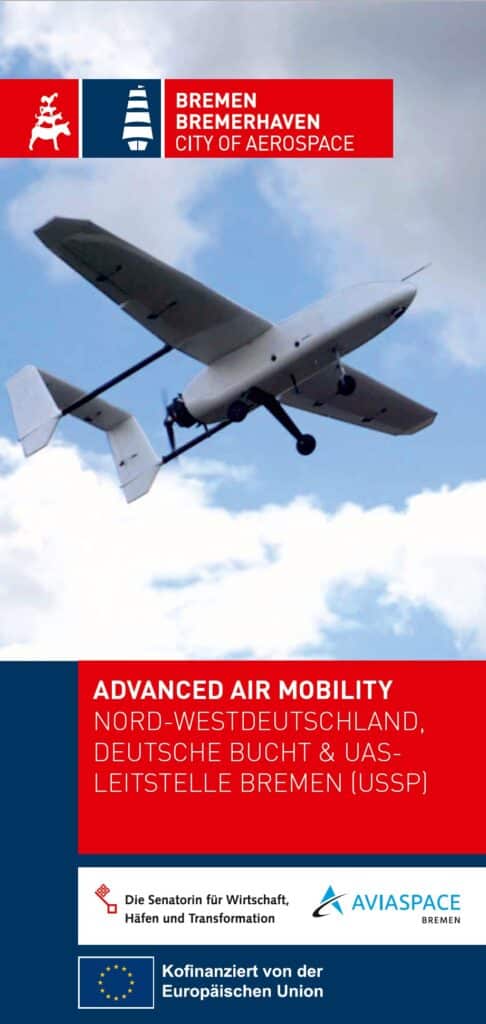
Das Land Bremen fördert erfolgreich im Rahmen des Luft- und Raumfahrtinnovationsclusters Bremen Bremerhaven City of Aerospace Unternehmen und Forschungseinrichtungen die Entwicklung und Anwendungen von Unbemannten Luftfahrtsysteme (UAS). Kompetenzen wurden im Bereich Entwicklung und Produktion von Hard- und Softwaresystemen, Luftfahrzeugsdesign, Avionik, Navigation, Sensorik aufgebaut. Gleichzeitig stehen Anwendungen von UAS zur Erfüllung verschiedenster Aufgaben im Fokus wie z.B. die Ausführung hoheitlicher Aufgaben in der Deutschen Bucht durch den Einsatz von Drohnen als Träger von Sensortechnik oder den Aufbau von Bodenstationen für UAS. Mit der Unterstützung der Advanced Air Mobility (AAM) Initiative Nordwestdeutschland und Deutsche Bucht & UAS-Leitstelle Bremen (USSP) wird das Land Bremen die Weiterentwicklung der UAS Aktivitäten der im Land ansässigen Akteure in Zusammenarbeit mit Niedersachsen weiter fördern.
Bremen Luft- und Raumfahrtstandort
In der Luft- und Raumfahrtindustrie erwirtschaften mehr als 140 Unternehmen und 20 Institute mit rund 12.000 Beschäftigten mehr als 4 Milliarden Euro pro Jahr. Gemessen an der Einwohnerzahl hat Bremen die höchste Beschäftigungsdichte in diesen Branchen in Deutschland. Zukunftsorientierte Arbeitsplätze, vor allem für hochqualifizierte Menschen, kennzeichnen die Raumfahrtindustrie und den Luftfahrtsektor. Die Spitzenforschung im Land Bremen unterstützt die Industrie nachhaltig u. a. in den Bereichen Materialwissenschaften und Produktionstechnologien, Raumfahrtsysteme, Fernerkundung, Bionik und Robotik.
Advanced Air Mobility Initiative
Gesamatziel des Vorhabens
Ziel der Initiative (AAM-NW) ist der sukzessive Aufbau von Luftraumstrukturen innerhalb derer der Betrieb von UAS einer erheblichen Koordinationsvereinfachung & -Automatisierung sowie Erhöhung der Sicherheit unter Berücksichtigung aller relevanten Luftraumnutzer erfährt. Damit sollen die Erfahrungen für die Schaffung zukünftiger hochautomatisierter Betriebsstrategien gesammelt werden, indem eine Verknüpfung und Einbindung von UAS Traffic Management (UTM) in existierende Air Traffic Management (ATM) Systeme erfolgt.
Das Land Bremen, mit dem Schwerpunkt der UAS-Leitstelle und das Land Niedersachsen, mit dem Schwerpunkt der Fluggebiete und flugtechnischen Infrastrukturen stehen hier kooperativ involviert zusammen, um die gemeinsame Ertüchtigung des Luftraumes für die Advanced Air Mobility zu unterstützen.
Weiterhin erfolgt perspektivisch eine Einbindung der weiteren norddeutschen Bundesländer (Mecklenburg-Vorpommern, Hamburg, und Schleswig-Holstein), additiv, d.h., dass die geplanten Bundesländer parallel geeignete Strukturen erarbeiten, um zu einem späteren Zeitpunkt mit der AAM-NW zusammenzuwirken.
Einführung
Vornehmlich wird unter Advanced Air Mobilty (AAM) eine Integration von unbemannten oder autonomen Luftfahrzeugen in einen gemeinsamen Luftraum mit der bemannten Luftfahrt verstanden, welche die Möglichkeit bieten, „sowohl Metropol- als auch ländliche Regionen unabhängig von bestehenden bodengebundenen Verkehrsinfrastrukturen schnell, sicher, nachhaltig und bezahlbar miteinander zu verbinden“. Gerade in ländlichen Regionen eignen sich aber auch kleinere UAS zur Übernahme bestimmter Monitoring- und Transportaufgaben.
Die deutsche Bucht, deren Inseln und angrenzenden Küstenländer bieten hier großes Potential um mit zunächst risikoärmeren Einsätzen und (kleineren) Fluggeräten außerhalb der Sicht Betriebsprozesse der unbemannten Luftfahrt zu erproben und diese Stück für Stück in die existierende bemannte Luftfahrt zu integrieren. Auch der Schifffahrt und dem Naturschutz müssen in der deutschen Bucht insbesondere Beachtung geschenkt werden. Ein sukzessiv aufgebauter Erfahrungsschatz durch regelmäßigen UAS Betrieb erlaubt die fortlaufende Erprobung von Betriebsabsprachen bis hin zur Hochautomatisierung der Flugbewegungskoordination durch eine zentrale Leitstelle und fördert gleichzeitig das Vertrauen in diese neue Technologie. An dieser Stelle setzt das Vorhaben an. Im Anschluss erfolgt eine Transformation des generierten Know-Hows in Gebiete und Missionen mit höherem Risiko z.B. in urbanen Räumen, höheren Nutzlast und auch Personen an Bord.
Zeitlicher Horizont und Ausbaustufen
Allen Phasen gemeinsam ist ein sukzessiver Aufbau der entsprechenden BVLOS-Flugbereiche (beyond visual line of sight / außerhalb der Sichtweite). Im Fokus steht dabei die Nutzung und Ausleuchtung des Very-Low-Level-Airspace (VLL). Für die jeweiligen Ausbaustufen ist eine Abdeckung durch das Luftlagebild zu erreichen und aufeinanderfolgend zu erweitern. Die entsprechenden Sichtbarkeiten von bemannter allgemeiner Luftfahrt, Luftrettung, Behörden und Organisationen mit Sicherheitsaufgaben (BOS) und UAS, im BVLOS-und VLOS-Betrieb (visual line of sight), sind gegenseitig sicherzustellen, zu erproben und nachzuweisen. Insbesondere da diese Aktivitäten vor dem Realbetrieb einen Testbetrieb erfordern.
Phase 0 – 2023 Vorarbeiten der Initiative: Zusammenstellung und Einbindung aller relevanten Luftraum-Teilnehmer
Phase 1 – 2024: BVLOS Bereiche Hatten – Deutsche Bucht inkl. Erprobungsbetrieb (roter Kartenbereich)
Phase 2 – 2024-2025: BVLOS Bereiche Cuxhaven & Helgoland inkl. Anschluss an Phase 1 inkl. Erprobungsbetrieb (blauer und grüner Kartenbereich)
Phase 3 – 2026-2028: Ausweitung und Anbindung weiterer Flugplätze wie z.B. Ostfriesische-Inseln, Leck und Nordholz inkl. Erprobungsbetrieb (Gelber Kartenbereich) „Von Separation zu Integration“
Phase 4 – Vision 2030 weitere Entwicklung in den jeweiligen aufgebauten U-Space(s) hin zur nahtlosen Anknüpfung an den „U4“ des SESAR ATM Masterplans ab 2035.
UAS-Leitstelle Bremen (USSP)
Ob für industrielle, universitäre, behördliche, sicherheitsdienstliche oder zivile Zwecke: der Einsatz von
Drohnen wird in den nächsten Jahren stark ansteigen und sehr wahrscheinlich sogar das Aufkommen im bemannten Flugverkehr übertreffen. Zur Koordinierung bedarf es zentraler Stellen, die Kollisionsvermeidung und entsprechende Ausweichverfahren für die unbemannte Luftfahrt initiieren können. Die EU DVO 2021/664ff sehen einen USSP (USSP = U-Space Service Provider) vor, der luftfahrttechnischen Dienste (z.B. Fluggenehmigungen und -aktivierung) digital für Drohnenbetreiber bereitstellt. Damit das AAM NW in diesem Sinne an der digitalen Transformation der Luftfahrt mitwirken kann ist aus Bremen heraus der Aufbau einer UAS-Leitstelle (USSP) geplant. Diese Leitstelle kann durch Echtzeitkoordination die bemannte Luftfahrt bei dringlich erforderlichen Einsätzen im VLL-Airspace schützen und gleichzeitig Luftraumnutzungspotentiale durch die unbemannte Luftfahrt eröffnen.
b.r.m. IT & Aerospace GmbH
Die b.r.m. IT & Aerospace GmbH ist auf der Aero in Friedrichshafen vom 09. – 11. April 2025 auf unserem Gemeinschaftsstand des Landes Bremen in der Halle B4 (Stand 312, Bremen) dabei. Wir zeigen dort unsere Dienstleistungen und Services zu UAS, SORA, ConOps, VLOS und BVLOS-Betrieb. Vom Betriebskonzept bis zur Genehmigung können selbst komplexe Aufgabenstellungen der unbemannten Luftfahrt erreicht werden.
Unser Team aus Luftfahrtexperten nimmt sich Ihrer spezifischen Anwendung der Advanced Air Mobility an, unabhängig an welchem Punkt der Entwicklung Sie stehen. Durch unsere jahrelange Erfahrung, beginnend mit der Entwicklung eines UAS, bis hin zur europäisch umfangreichsten Aufstiegsgenehmigung über 3600 km², können Sie den entscheidenden Zeitvorteil erlangen, um im aufstrebenden Drohnenmarkt Erfolg zu haben.
Wir unterstützen Sie als zukünftiger U-Space Service Provider (USSP) in allen Bereichen der Flugführung und Freigaben. Profitieren Sie von unseren UTM Data Services, vom Wetterdienst bis zur elektronischen Sichtbarmachung und digitalen Luftlagebild.
Hatten-UAS German Flight Center ist das Erprobungszentrum für die unbemannte Luftfahrt, gelegen auf dem Verkehrslandeplatz Oldenburg-Hatten EDWH. Hatten-UAS kann jederzeit Unternehmen, Behörden und Organisationen mit Sicherheitsaufgaben, Hochschulen und wissenschaftlichen Einrichtungen für Projekte und Produktentwicklungen für unbemannte Luftfahrzeugsysteme unterstützen. Mit 5500 m² Hallenfläche, lizensierten Luftfahrzeugprüfern und einer Betriebsfläche, die auch gemischten Betrieb bemannt/unbemannt erlaubt, erhalten Sie Alles aus einer Hand: von der Bodenerprobung bis zur Kundenpräsentation.
Für Ihren UAS-Betrieb unterstützt Sie die Flugschule Borkum durch qualifizierte Ausbildungen für Ihre Fernpiloten. Als einer der ersten Antragsteller auf ein „Light UAS Operator Certificate“ (LUC) unterstützen wir Sie beim Aufbau eines qualifizierten Flugbetriebs.
Besuchen Sie uns auf der AERO in Halle B4 (Stand 312, Bremen) und besprechen Sie mit uns, wie Ihre zukünftigen UAS-Anwendungen einen gelungenen Start hinlegen.
Für weitere Informationen steht Ihnen unsere Geschäftsführung um Herrn Harald Rossol und Herrn Markus Rossol gerne zur Verfügung. Sie erreichen uns per Telefon unter +49 421 34 14 94 und per Mail an brm@brm.de.
Wir freuen uns auf die Aero 2025 und ein Kennenlernen mit Ihnen.
Drone Days 2025
Schaffen Sie es nicht zu AERO?? Dann sehen wir uns bei den Drone Days 2025
IT-Service, UAS, USSP. AAM, Green IT und der Flugplatz Oldenburg-Hatten sind mit und durch Drohnen ein weiterer Aspekt der Transformation zur Digitalisierung.
You are currently viewing a placeholder content from Turnstile. To access the actual content, click the button below. Please note that doing so will share data with third-party providers.
You are currently viewing a placeholder content from Facebook. To access the actual content, click the button below. Please note that doing so will share data with third-party providers.
You are currently viewing a placeholder content from Instagram. To access the actual content, click the button below. Please note that doing so will share data with third-party providers.
You are currently viewing a placeholder content from X. To access the actual content, click the button below. Please note that doing so will share data with third-party providers.