
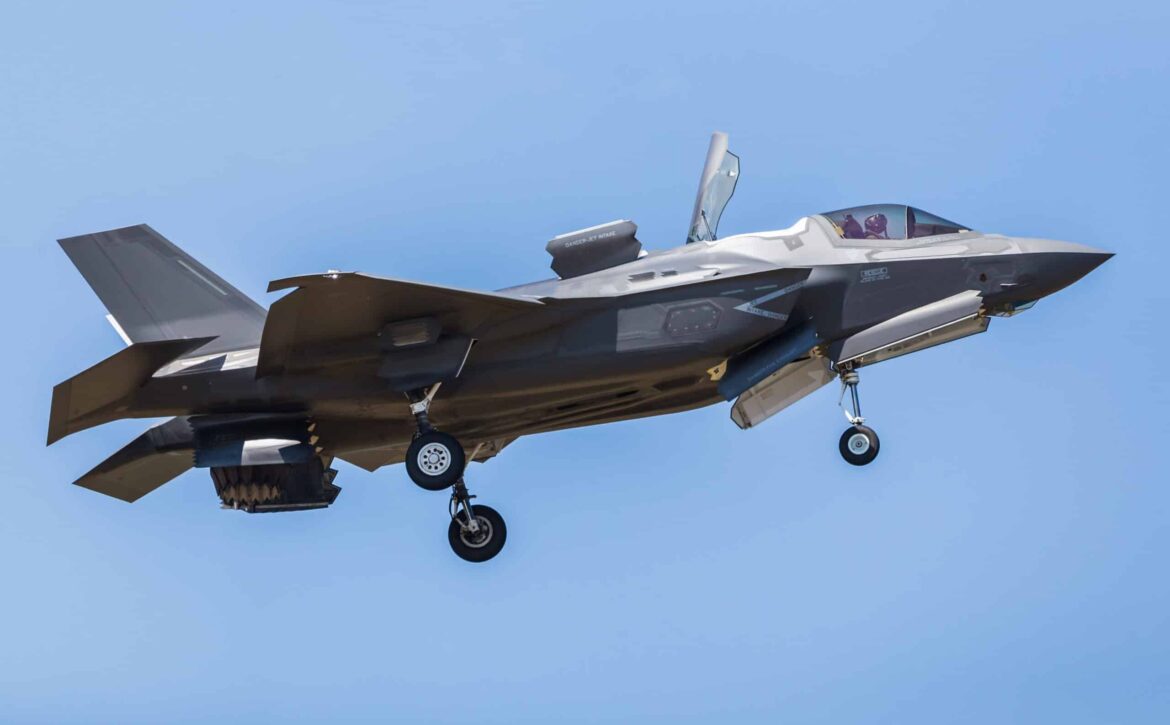
RAF F-35B stealth fighter

VTOL - a vertical take-off has advantages

An airplane is great for quick exploration, but what if the runways are unusable? This is exactly where a VTOL comes into play, which is not dependent on it.

VTOL - a vertical take-off has advantages

How a VTOL works

A "Vertical Take-Off and Landing", or VTOL for short, describes a flying object that can take off and land vertically, i.e. without a runway. Although this also includes helicopters, it usually refers to aircraft with wings. From a technical point of view, there are two types of propulsion for such hybrids.

Some consist of combined lift and thrust drives that change their flight mode with the help of tilt rotors, for example. Depending on the angle of inclination of the rotors, the flying object can fly like a helicopter or like a normal airplane. In a VTOL jet, only the thrust from the engines is redirected by tilting elements.

In a VTOL with separate lift and thrust drives, for example, there are engines in addition to two fixed rotors. Depending on the flight mode, either the rotors or the engines are used.

Use of hybrid aircraft

A VTOL is often used by the military for places that are difficult to reach, where the ground is not firm or sufficient for a horizontal landing. For the same reason, authorities and organizations with security tasks use this type. They are used for disaster control, public safety and SAR operations.

B.r.m. also benefits from the use of VTOL. In the VTOL-EGM project, the Bremen-based IT service provider is working with OptoPrecision GmbH and the Institute of Environmental Physics at the University of Bremen to develop environmental monitoring using drones. This involves taking measurements in places that are inaccessible to humans. This data is then evaluated to provide information on environmental pollution.
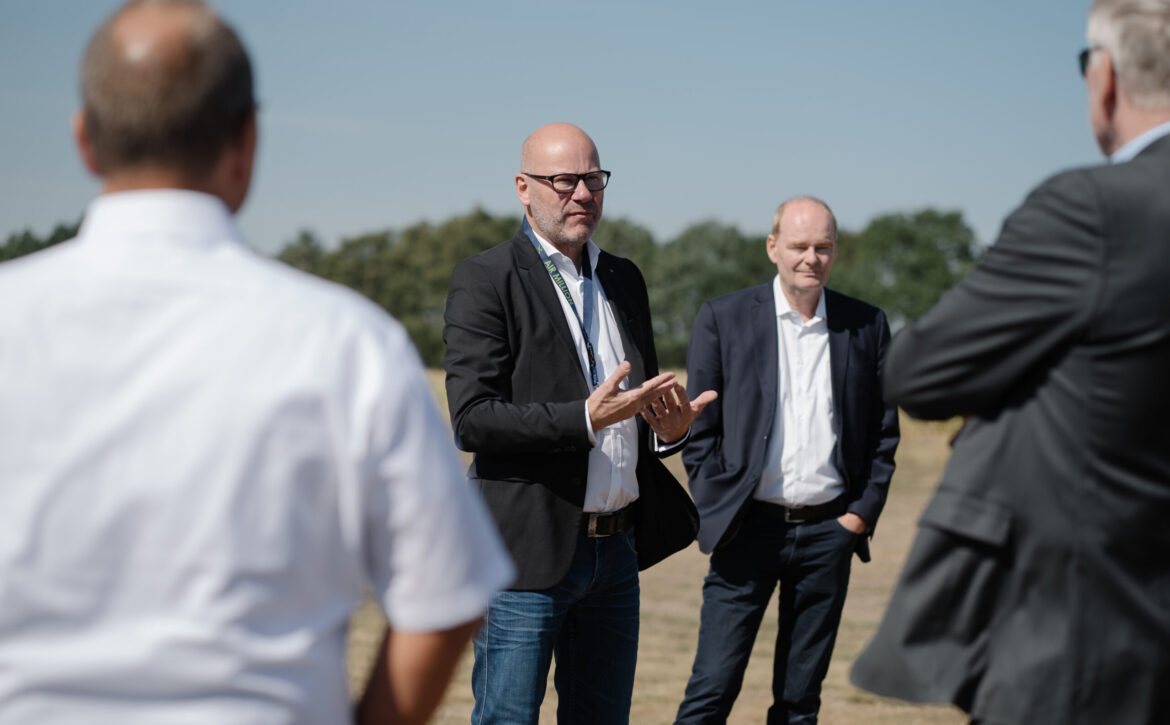
Aviaspace Roadshow - b.r.m. and U-Space

As part of the AVIASPACE BREMEN e.V. roadshow, Bremen-based IT service provider b.r.m. was able to demonstrate concepts that enable the integration of UAVs and UASs into conventional air traffic, known as U-Space. Together with the development and system service provider OptoPrecision GmbH, further innovative projects are being added to the VTOL-EGM project.

VTOL-EGM - AviaSpace Roadshow

U-Space provides motivation

With the establishment of U-Space, an airspace for unmanned flying objects, EASA has created the cornerstone for coordinated civil drone aviation. Means such as iConspicuity will make air traffic safer and open up the market for U-Space service providers.

In the VTOL-EGM project, the companies OptoPrecision GmbH and b.rm. are developing solutions to make environmental monitoring more efficient. These are used for extensive measurements at sources of environmental pollution. Since pollution is present in many places that are difficult or resource-intensive for humans to access, UAS with remote pilots are used.

U-Space Service Provider

While OptoPrecision GmbH, with its many years of experience in surveillance, (AI) detection and tracking, takes care of sensor development, drone development and operation, b.r.m. assumes the role of a U-Space service provider. This includes tasks such as network identification, UAS flight approval and geo-sensitization. The Hatten-UAS test site for drone testing has already been used in the VTOL-EGM project and is located at the Oldenburg-Hatten EDWH airfield. The 16-hectare airfield is also perfectly suited as a base of operations thanks to its favorable location. Hatten-UAS can also be used for training and testing.

The commercial use of UAS must take place integratively within the airspace with other manned aircraft participants; there can be no segregation. The temporary closure of different airspaces for a UAS flight is now a thing of the past. Close cooperation between the various stakeholders will ensure that U-Space North Germany is created. The establishment of U-Space Norddeutschland will provide the innovation boost that aviation needs to open up the drone market.

Harald Rossol and Markus Rossol presented the exact procedure for this project in the AviaSpace Roadshow presentation. We would also like to thank all participants for the successful event!

You can find out more about the North German aerospace cluster on the Aviaspace Bremen e.V. website