Category: ATM

b.r.m. visits Polaris

Today we were guests at POLARIS Spaceplanes and were able to talk to Managing Director Alexander Kopp about the latest development of the MIRA.

A look behind the scenes was also included.

Polaris

Drone Day is coming. A joint event organized by the states of Bremen and Lower Saxony, it is the highlight of the drone community.

Day of the Regions in Hatten

Day of the Regions in Hatten

Also at Oldenburg-Hatten airfield

The Day of the Regions will take place in Hatten on September 29, 2024. Our cooperation partner, Oldenburg-Hatten airfield, will also be taking part in this extraordinary event.

14 companies are taking part. At these stations, you are invited to look around, take part, find out more and also have a drink and a bite to eat. The individual stations can be reached by bike, on foot or by car. In total, the stations are spread over a distance of 50 kilometers.

At the Oldenburg-Hatten airfield, too, a friendly team awaits you with information about the Hatten region and, of course, about flying. Of course, the café is also open here for refreshments. There is also a great playground for younger guests.

Droneday

Drone Day

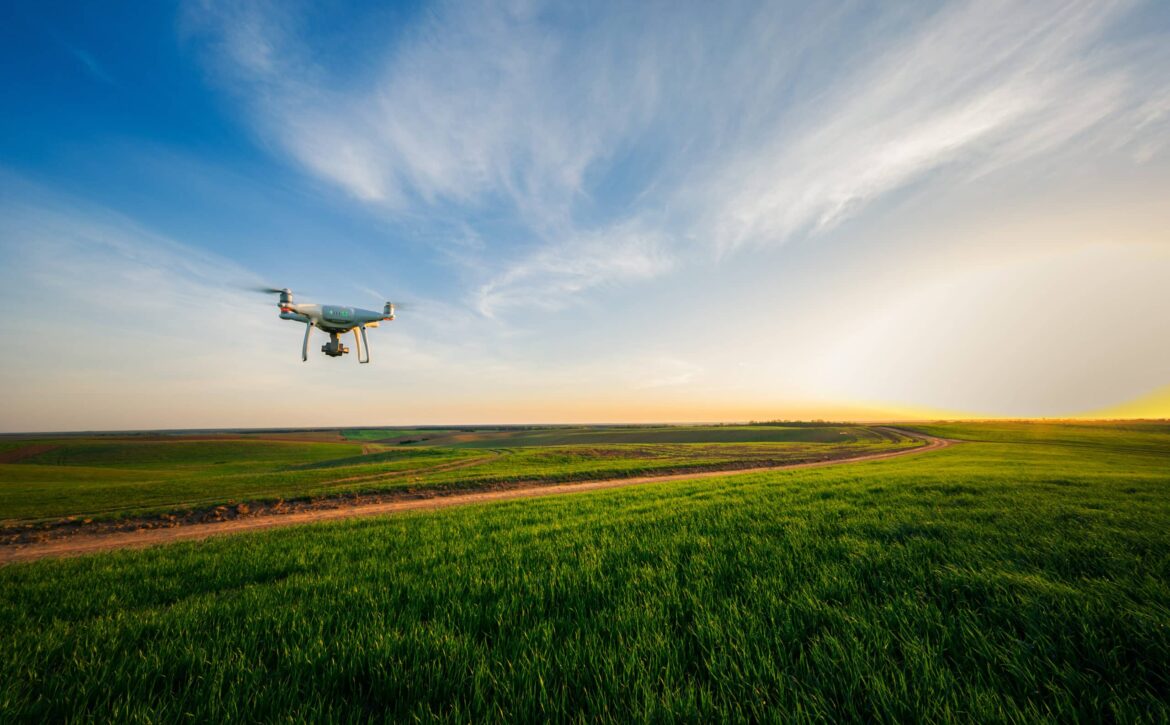
The "Drone Day" photo shows our wonderful drone at sunset. Droneday is a community event and is the highlight of every drone community. Information, presentations, networking, exhibitions and flight demonstrations round off Droneday.

Our team will of course be happy to provide you with further information.

drone quad copter on green corn field

Fawn rescue - UAS control center Bremen USSP

Advanced Air Mobility in rural areas

Saving lives with the help of UAS

Doe fawns put their newborns in camouflage at the beginning of May each year to protect them from other wild animals. In the first three to six weeks, fawns rely completely on their camouflage and scentlessness, and they also show no flight behavior during this time. This type of camouflage would be sufficient against their natural enemies, but roe deer often seek shelter in grassland used for agriculture. However, mowing takes place there every year in May. Mowing is the technical term for harvesting grass and grain. Large mowing machines are used for mowing. This kills 90,000 deer and other wild animals every year.

In the past, several methods have been established to control the fields, so-called deterrence methods. For example, searching fields with dogs or hanging up plastic bags, but all methods have proved unreliable due to the special characteristics of fawns. Due to European regulations, the use of drones has often only been a limited option.

However, an exemption rule came into force on May 20, 2024, which considerably simplifies the use of drones for agricultural and animal welfare purposes.

This is how the rescue of fawns works:

  • The drones used to rescue fawns are equipped with thermal imaging cameras. For larger agricultural areas, it is necessary to fly over the field several times, as this is the only way to carry out a complete scan. However, this requires the drone to be equipped with a GPS receiver. In order to locate the animals as accurately as possible, the scans are often carried out at night or early in the morning, when the temperature difference is at its most pronounced.
  • When a fawn has been located, the drone hovers over it to signal to the rescue team where it is. In the best case scenario, the rescue team is equipped with radios to coordinate the search.
  • When the rescue team arrives at the fawn, the farmer can decide whether to avoid the area where the fawn is lying when mowing or to release the fawn at the edge of the field. If he releases the fawn, however, the helpers must ensure that the young animals are not touched by hand. It is best to use tufts of grass or grain to prevent odor transfer through direct physical contact. Direct physical contact could alienate the fawn's scent, as a result of which its mother would no longer be able to find it or would expel it.

Even if it is primarily about saving fawns, it is not only the wild animals that benefit. Farmers also have real added value. After all, if an undetected animal carcass gets from the meadow into the loader wagon and on to the store, it can lead to life-threatening poisoning in the livestock. To prevent this, fawn rescue with drones is the fastest, most effective and also the gentlest method. Even large and confusing meadow areas can be flown over and reliably checked in a short time. Seen in this light, fawn rescue is a real win-win situation for both the wild animals and the farmer.

A large flowering area has also been created next to the runway of Hatten-UAS German Flight Center. You can find more information here blühfläche.de

If you have any further questions, please do not hesitate to contact us

Efficient Agrotech: Automation in Modern Farming with Drones and Machine Learning. Generative AI

Autonomous systems - UAS - USSP

Drone communication systems

b.r.m. IT & Aerospace GmbH is pleased to be mentioned in the new WFB article on autonomous systems.

As a future U-Space Service Provider, we will make multiple drone applications possible in Bremen, Germany and Europe. You can read more about our projects relating to the Bremen UAS Control Center USSP, Hatten-UAS and the Advanced Air Mobility Initiative Northwest Germany and German Bight in the WfB article and on our website.

Our team will be happy to answer any further questions you may have.

USSP - Feasibility study - b.r.m. IT & Aerospace GmbH

b.r.m. IT & Aerospace GmbH

Executive Summary

Feasibility study for the establishment of b.r.m. Bremen UAS control center (USSP)

The feasibility study evaluates the requirements for the innovative implementation of a USSP service (U-space Service Provider) in Europe. The phases of this feasibility study were the identification of stakeholders, interviews with them, definition of USSP services and an initial market analysis. The requirements for a USSP result from EU Regulation 2021/664 of April 22, 2021, valid since January 26, 2023. The study finds that the provision of a USSP offering is possible once regulatory frameworks are established. The use of drones is expected to increase significantly and the newly created airspace element in the EU DVO 2021/664, the "U-Space", will gain in importance. The company b.r.m. IT & Aerospace aims to assume the functions anchored in the EU regulation as one of the U-Space service providers at all technical, operational and organizational levels, including throughout Europe, and to provide these services sustainably as green IT.

The feasibility study identified and involved the various stakeholders from the categories of aviation supervisory authorities, organizations with organizational tasks in air traffic, UAS operators and UAS developers. The special feature of the study is the more than 400 national and European stakeholders identified with whom the extensive list of questions was worked on.

The implementation of the U-Space concept requires uniform application of European regulations at national level, clear responsibilities and avoidance of contradictions between national and European regulations. Regional specifics of air traffic supervision must be taken into account, and transparent information for operators and authorized users is crucial.

A USSP is necessary to enable the successful integration of manned and unmanned aviation and to safely put the numerous UAS applications into operation and make them commercially successful.

For more detailed information on the feasibility study, please contact us directly:

Markus Rossol

markus.rossol@brm.de

b.r.m. IT & Aerospace GmbH

Schwachhauser Heerstraße 214

D-28213 Bremen

TEL: +49 421 341494

You can download our feasibility study here
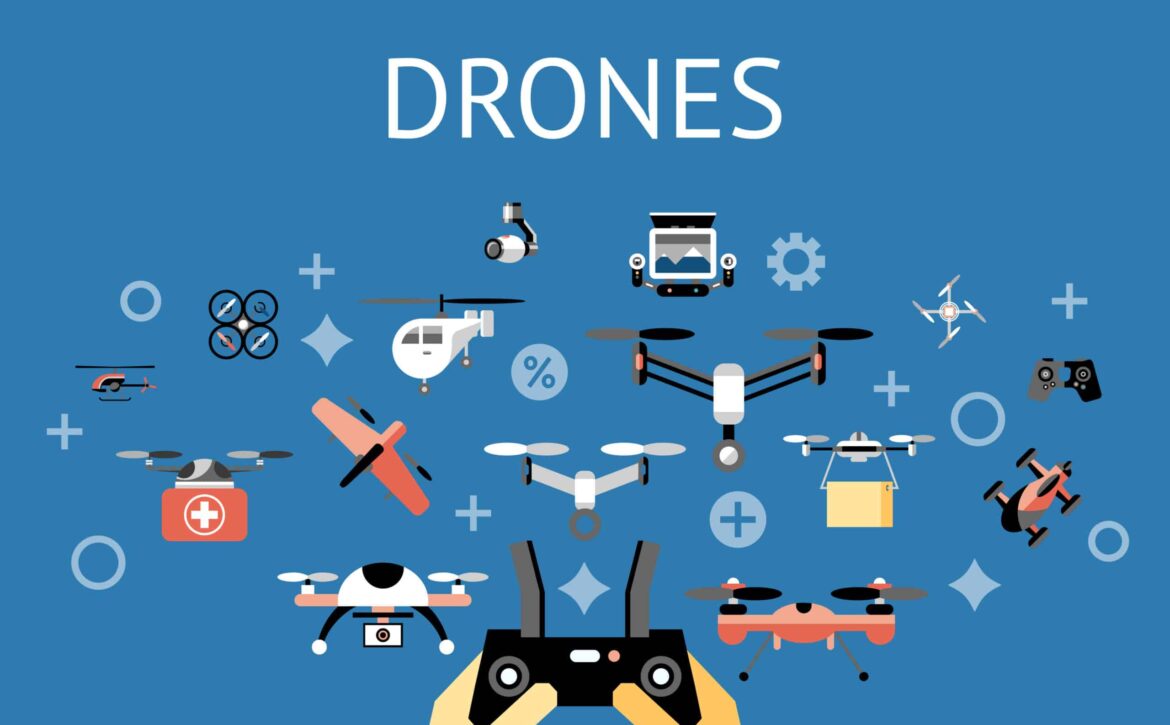
Digital vector flying drone objects color

UTM & ATM, UTM - Unmanned Aircraft System Traffic Management, ATM - Air Traffic Management 

UTM ATM

ATM - Air Traffic Management

ATM, or "air traffic management", is a generic term used in the aviation industry to summarize all systems that are required for the coordination of air traffic. This includes, among other things:

  • Air traffic services
  • Air traffic control
  • Airspace management 
  • Air traffic flow
  • Capacity

The aim of ATM is to enable smooth, safe and economical air traffic in all phases of a flight. Air traffic management is used for all manned aircraft, whether passenger or cargo flights.

UTM - Unmanned Aircraft System Traffic Management

UTM - Unmanned Aircraft System (UAS) Traffic Management describes a system that manages the harmonization between the ATM and UAS - Unmanned Aircraft System (mainly drones). 

A UTM serves as a safety system for drones in airspace. The system functions fully automatically and has the following features:

  • Central database: All registered UAS, drone operators or geographical conditions are stored here 
  • Mapping/ cartography: Airspace representation with topography, satellite images and road maps. No-fly zones and other airspaces are also displayed. 
  • Positioning and flight tracking: Precise positioning, for example via mobile radio or transponder. In addition, the drone is continuously recorded and coordinated with other flying objects (manned and unmanned) to prevent flying accidents.
  • Mission data processing: Recording the flight plans, including the take-off location, take-off time, flight route and planned landing location. The UTM system uses this data to check whether the flight plan complies with all the rules.
  • Environmental data: Display of weather conditions. The environmental data records the magnetic radiation, which in turn can affect the GPS connection.
  • Safety functions: Using the data collected from the previous functions, the UTM system can detect conflicts at an early stage and prevent them by possibly changing the flight plan.
  • Mission planning: Based on the flight planning and the conflicts identified, the UTM system determines which flight path changes need to be made in order to resolve the conflicts.
  • Planned: Conflict detection and conflict avoidance: In future, the UTM system is to automatically transmit conflict avoidance (including flight plan changes) to the drone in question.

With the help of this technology, drones are to be smoothly integrated into general ATM in the future. Benefit from our expertise and find out how you can successfully launch your own drone or drone application.

Markus Rossol, 0421/341494, markus.rossol@brm.de

b.r.m. IT & Aerospace GmbH