Our special thanks go to the entire organizing team, Mr. Thore Güldner (Member of Parliament Oldenburg-Land), Dr. Christian Pundt (District Administrator Wildeshausen), Mr. Guido Heinisch (Mayor Hatten), Mr. Andreas Heyer, Mr. Andreas Eickhoff, Prof. Rolf Henke, Mr. Kai Brune, Mr. Michael Wieland, Mr. Stefan Schröder, Dr. Barbara Cembella, Mr. Matthias Brucke, Dr. Martin Nägele, Mr. Michael Schmidt, Mr. Franjo Wieland, Mr. Stefan Schröder, Mr. Matthias Brucke, Dr. Martin Nägele and Mr. Michael Schmidt. Rolf Henke, Mr. Kai Brune, Mr. Michael Wieland, Mr. Stefan Schröder, Dr. Barbara Cembella, Mr. Matthias Brucke, Dr. Martin Nägele, Mr. Michael Schmidt, Mr. Franjo Wöstmann, Mr. Florian Kruse, Mr. Uwe Nortmann and Mr. Götz Anspach von Broecker.
The weather gods were also on our side on this great day.
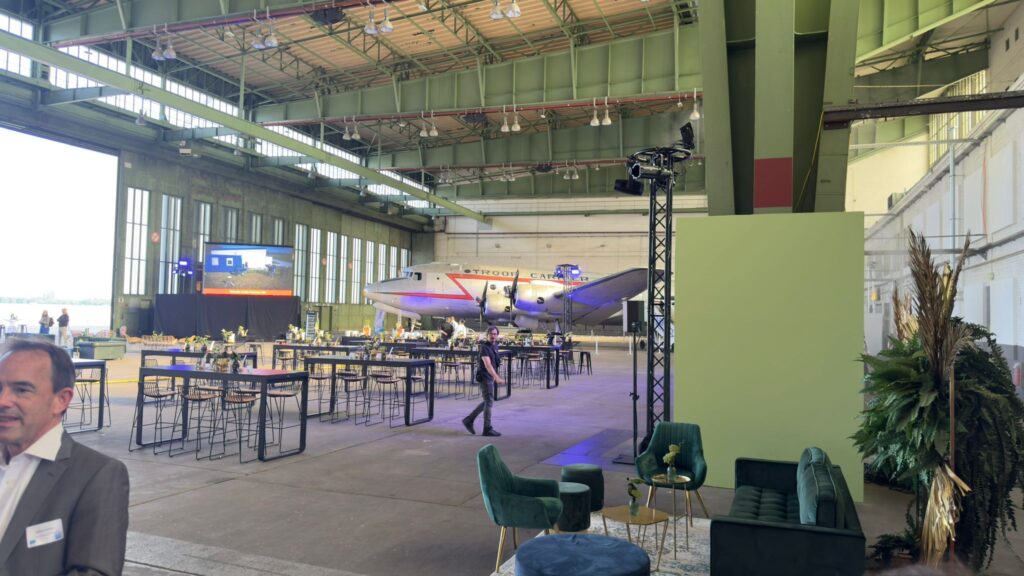
The Day of the Regions will take place in Hatten on September 29, 2024. Our cooperation partner, Oldenburg-Hatten airfield, will also be taking part in this extraordinary event.
14 companies are taking part. At these stations, you are invited to look around, take part, find out more and also have a drink and a bite to eat. The individual stations can be reached by bike, on foot or by car. In total, the stations are spread over a distance of 50 kilometers.
At the Oldenburg-Hatten airfield, too, a friendly team awaits you with information about the Hatten region and, of course, about flying. Of course, the café is also open here for refreshments. There is also a great playground for younger guests.
Droneday
The "Drone Day" photo shows our wonderful drone at sunset. Droneday is a community event and is the highlight of every drone community. Information, presentations, networking, exhibitions and flight demonstrations round off Droneday.
Our team will of course be happy to provide you with further information.
Doe fawns put their newborns in camouflage at the beginning of May each year to protect them from other wild animals. In the first three to six weeks, fawns rely completely on their camouflage and scentlessness, and they also show no flight behavior during this time. This type of camouflage would be sufficient against their natural enemies, but roe deer often seek shelter in grassland used for agriculture. However, mowing takes place there every year in May. Mowing is the technical term for harvesting grass and grain. Large mowing machines are used for mowing. This kills 90,000 deer and other wild animals every year.
In the past, several methods have been established to control the fields, so-called deterrence methods. For example, searching fields with dogs or hanging up plastic bags, but all methods have proved unreliable due to the special characteristics of fawns. Due to European regulations, the use of drones has often only been a limited option.
However, an exemption rule came into force on May 20, 2024, which considerably simplifies the use of drones for agricultural and animal welfare purposes.
This is how the rescue of fawns works:
The drones used to rescue fawns are equipped with thermal imaging cameras. For larger agricultural areas, it is necessary to fly over the field several times, as this is the only way to carry out a complete scan. However, this requires the drone to be equipped with a GPS receiver. In order to locate the animals as accurately as possible, the scans are often carried out at night or early in the morning, when the temperature difference is at its most pronounced.
When a fawn has been located, the drone hovers over it to signal to the rescue team where it is. In the best case scenario, the rescue team is equipped with radios to coordinate the search.
When the rescue team arrives at the fawn, the farmer can decide whether to avoid the area where the fawn is lying when mowing or to release the fawn at the edge of the field. If he releases the fawn, however, the helpers must ensure that the young animals are not touched by hand. It is best to use tufts of grass or grain to prevent odor transfer through direct physical contact. Direct physical contact could alienate the fawn's scent, as a result of which its mother would no longer be able to find it or would expel it.
Even if it is primarily about saving fawns, it is not only the wild animals that benefit. Farmers also have real added value. After all, if an undetected animal carcass gets from the meadow into the loader wagon and on to the store, it can lead to life-threatening poisoning in the livestock. To prevent this, fawn rescue with drones is the fastest, most effective and also the gentlest method. Even large and confusing meadow areas can be flown over and reliably checked in a short time. Seen in this light, fawn rescue is a real win-win situation for both the wild animals and the farmer.
A large flowering area has also been created next to the runway of Hatten-UAS German Flight Center. You can find more information here blühfläche.de
ATM, or "air traffic management", is a generic term used in the aviation industry to summarize all systems that are required for the coordination of air traffic. This includes, among other things:
Air traffic services
Air traffic control
Airspace management
Air traffic flow
Capacity
The aim of ATM is to enable smooth, safe and economical air traffic in all phases of a flight. Air traffic management is used for all manned aircraft, whether passenger or cargo flights.
UTM - Unmanned Aircraft System Traffic Management
UTM - Unmanned Aircraft System (UAS) Traffic Management describes a system that manages the harmonization between the ATM and UAS - Unmanned Aircraft System (mainly drones).
A UTM serves as a safety system for drones in airspace. The system functions fully automatically and has the following features:
Central database: All registered UAS, drone operators or geographical conditions are stored here
Mapping/ cartography: Airspace representation with topography, satellite images and road maps. No-fly zones and other airspaces are also displayed.
Positioning and flight tracking: Precise positioning, for example via mobile radio or transponder. In addition, the drone is continuously recorded and coordinated with other flying objects (manned and unmanned) to prevent flying accidents.
Mission data processing: Recording the flight plans, including the take-off location, take-off time, flight route and planned landing location. The UTM system uses this data to check whether the flight plan complies with all the rules.
Environmental data: Display of weather conditions. The environmental data records the magnetic radiation, which in turn can affect the GPS connection.
Safety functions: Using the data collected from the previous functions, the UTM system can detect conflicts at an early stage and prevent them by possibly changing the flight plan.
Mission planning: Based on the flight planning and the conflicts identified, the UTM system determines which flight path changes need to be made in order to resolve the conflicts.
Planned: Conflict detection and conflict avoidance: In future, the UTM system is to automatically transmit conflict avoidance (including flight plan changes) to the drone in question.
With the help of this technology, drones are to be smoothly integrated into general ATM in the future. Benefit from our expertise and find out how you can successfully launch your own drone or drone application.
The ILA 2024 has closed its doors, everything is packed up, the participants, spectators and exhibitors have returned home and are now working through the trade fair.
We too....
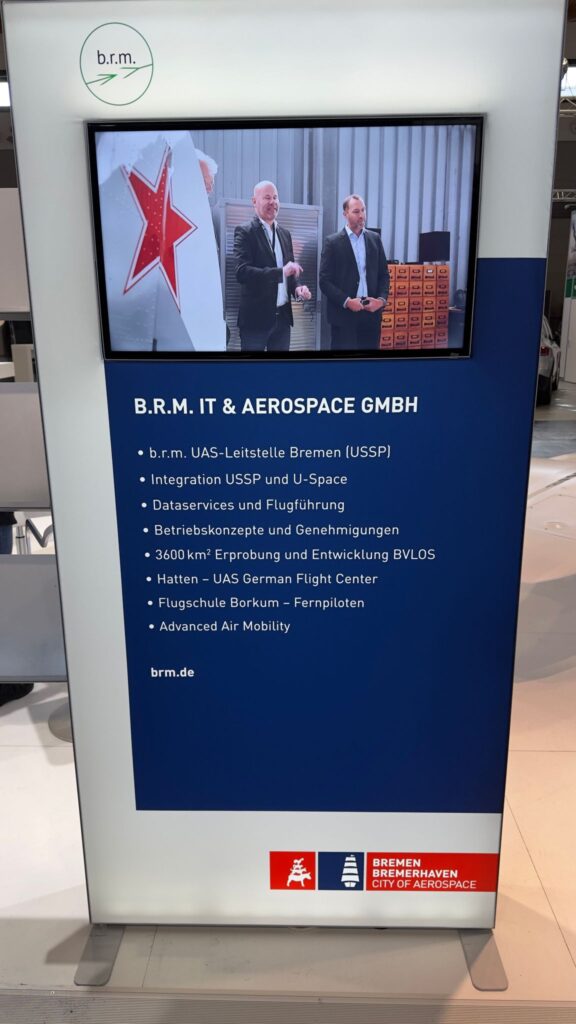
The b.r.m. IT & Aerospace GmbH was represented at the ILA from June 5 to 9, 2024 and presented ourselves with the federal state of Bremen in the joint showcase of the northern German states, in CHALET EAST 22 - 24.
It was simply great, the surroundings, the fair, the preparation, the execution, a big thank you to all participants and organizers.
Thank you
AES Aircraft Elektro/Elektronik System GmbH
AVIASPACE Bremen e.V.
b.r.m. IT & Aerospace GmbH
DLR Virtual Product House (VPH)
ECOMAT
esploro projects GmbH
Hanseatische Waren Handelsgesellschaft mbH & Co. KG
TRIGO ADR Germany GmbH
We were able to showcase our capabilities and services at the ILA 2024:
U-Space Service Provider
future UAS control center Bremen (USSP).
SORA 2.5
VLOS and BVLOS operation
Development of the operating concept through to approval
3600 km² UAS flight area in northern Germany
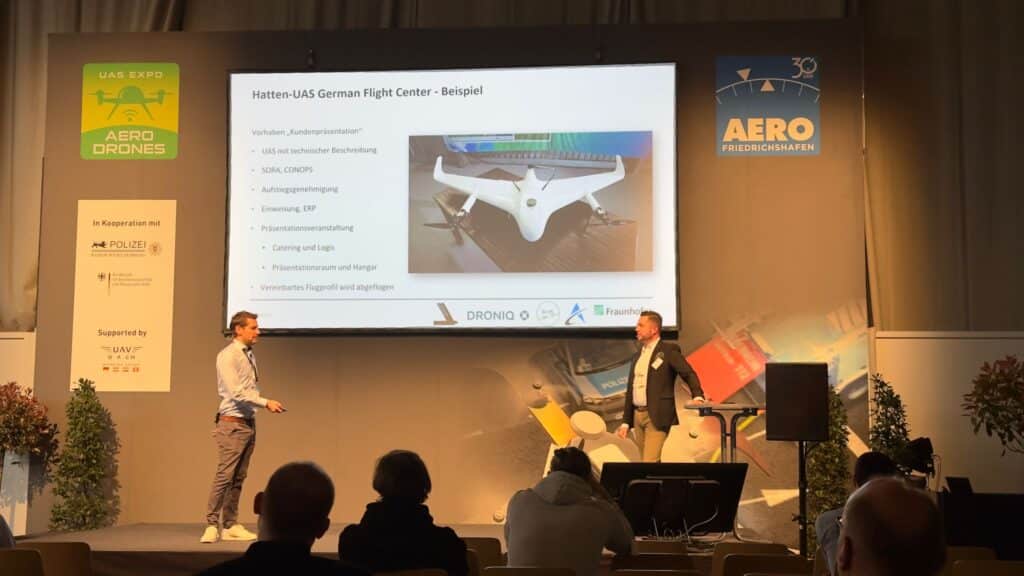
Hatten-UAS (EDWH) as a complete UAS Flight Center
100 years of aircraft construction Bremen "Focke-Wulf"
The b.r.m. IT & Aerospace GmbH will be back at the ILA 2026, talking to each other and starting projects, we can already do that now.
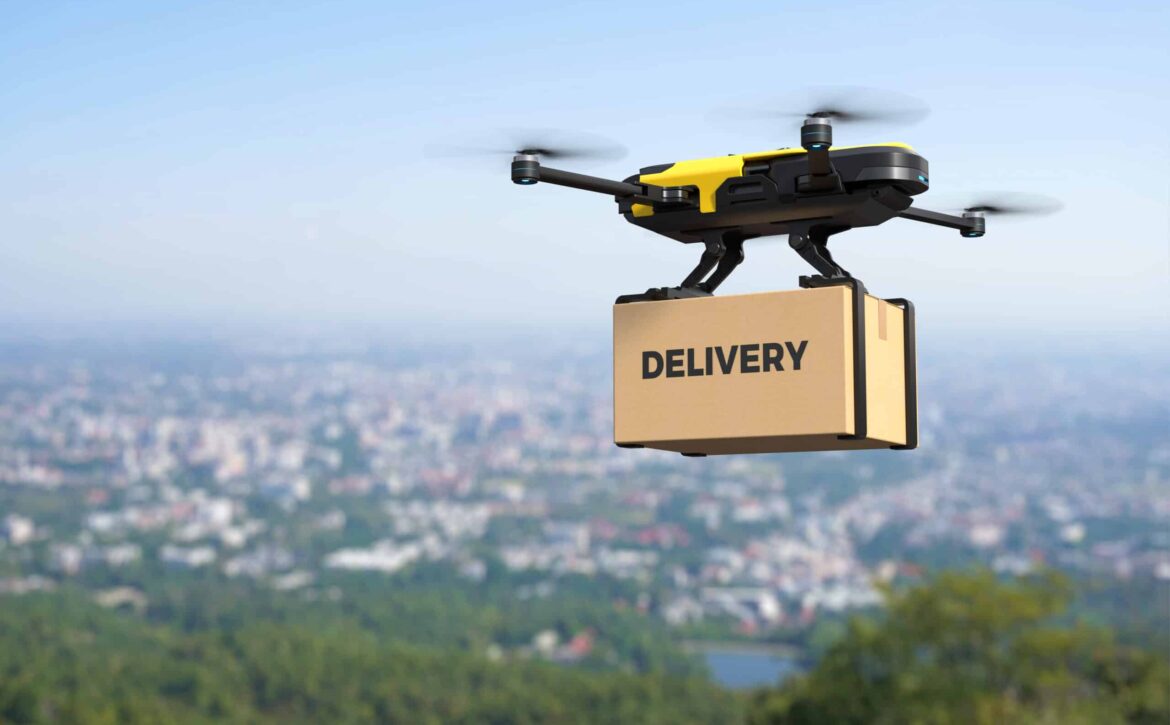
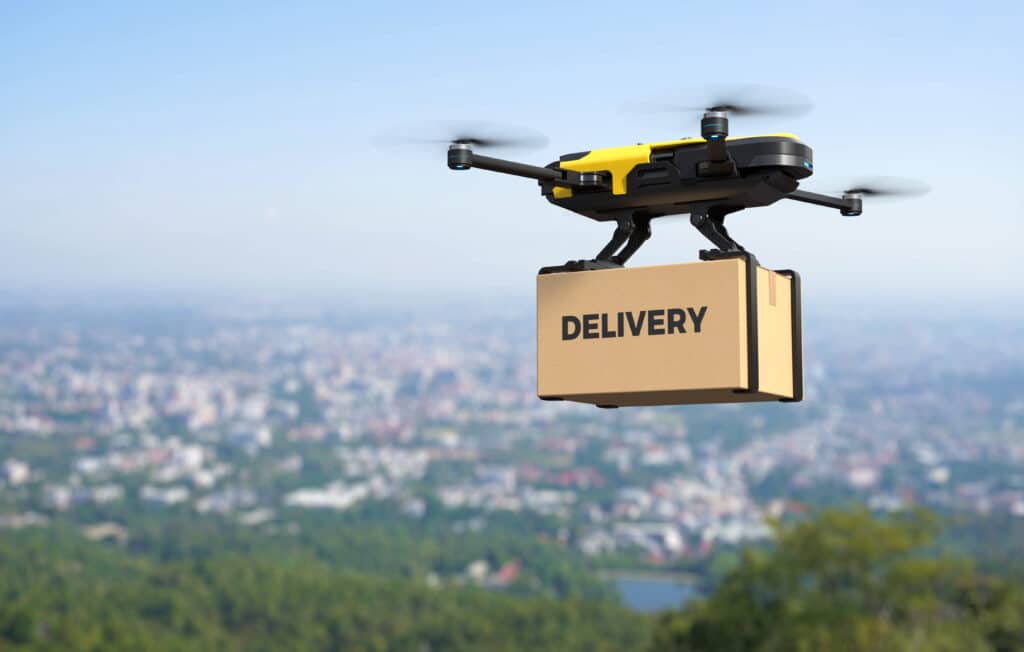
Supplying the East Frisian Islands is very challenging due to the natural conditions. More than half of the East Frisian Islands are tide-dependent, which means that passage by ship is limited in time. In this respect, drones are independent, fast and cost-effective.
Delivery drones - great potential on the East Frisian Islands
The transportation of goods with the help of drones is very popular with pharmacists, for example. In the fall of 2014, deliveries by drone from the mainland to the East Frisian island of Juist were extensively tested. It turned out that the drones were particularly reliable, especially for deliveries at short notice. In emergencies, people on the island could be quickly supplied with important medicines, demonstrating the enormous potential of drones. Although a drone with a transport weight of around 1.2 kilograms was not yet able to supply the entire island, it was able to help very well in important situations. The integration of drones into the existing delivery traffic on the East Frisian Islands is therefore conceivable.
The German Parcel and Express Logistics Association also believes that this solution makes sense. Above all because the drones are ready for take-off within a very short time and are cheaper than a ship or helicopter. Especially as fixed delivery routes between packing stations of the German parcel service DHL already exist and work in China. In order to minimize the use of resources, the drones are loaded and unloaded completely autonomously. DHL has already announced further development and expansion. A customized logistics solution like this could therefore soon also exist for the East Frisian Islands.
The Bremen-based company b.r.m. offers extensive tests on the use of drones. IT & Aerospace. Our own drone test center Hatten-UAS at the airfield Oldenburg-Hatten EDWH with an adjacent test flight area of over 3600 km², which extends from Hatten to the North Sea, the East Frisian Islands and Helgoland, lay the foundation for your test campaigns. If you are interested or have questions about our projects, please contact Mr. Markus Rossol.
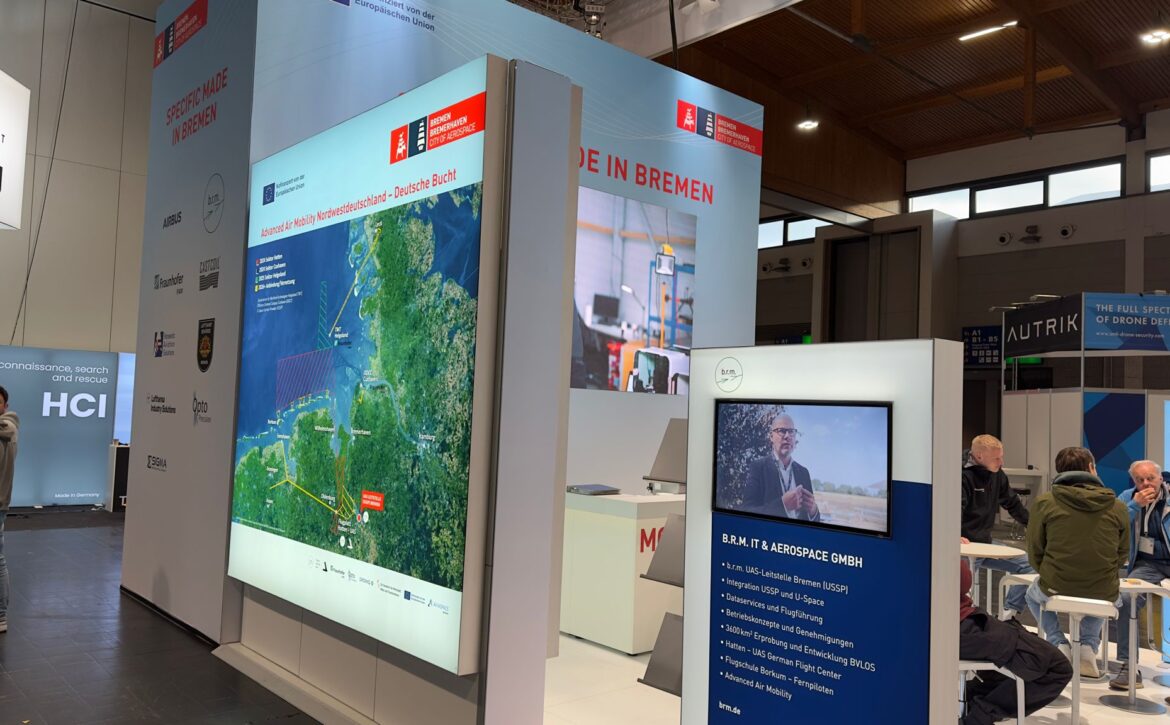
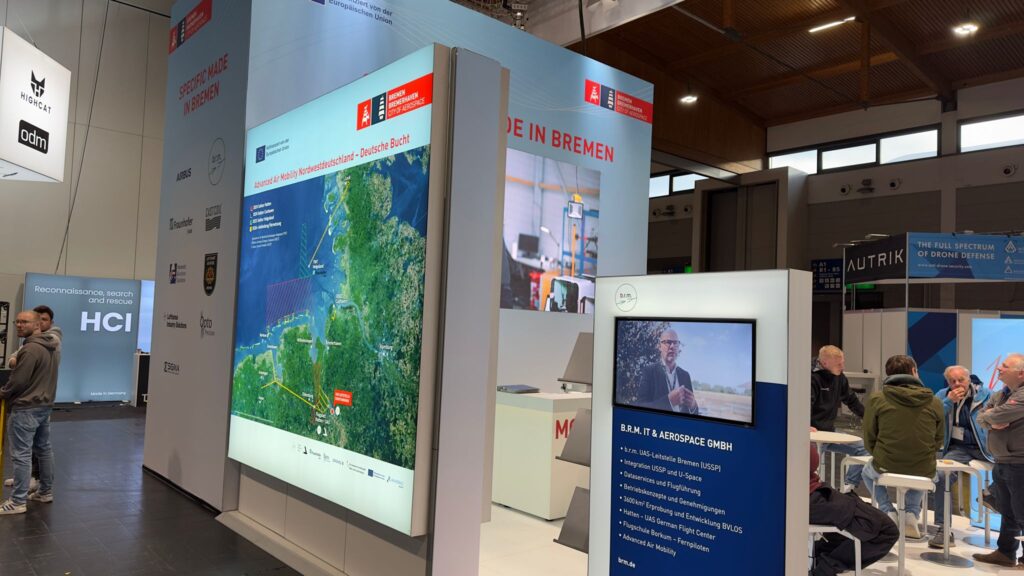
A cheerful "Moin Moin" from the joint stand of the State of Bremen (Hall 2 Stand 309) from b.r.m. IT & Aerospace GmbH. Together with other companies from Bremen, we share great experiences from this year's AERO in Friedrichshafen. So here are our great impressions.
We look forward to your visit to the AERO and the Bremen joint stand in Hall 2 Stand 309, where Mr. Harald Rossol and Mr. Markus Rossol will be waiting for you.
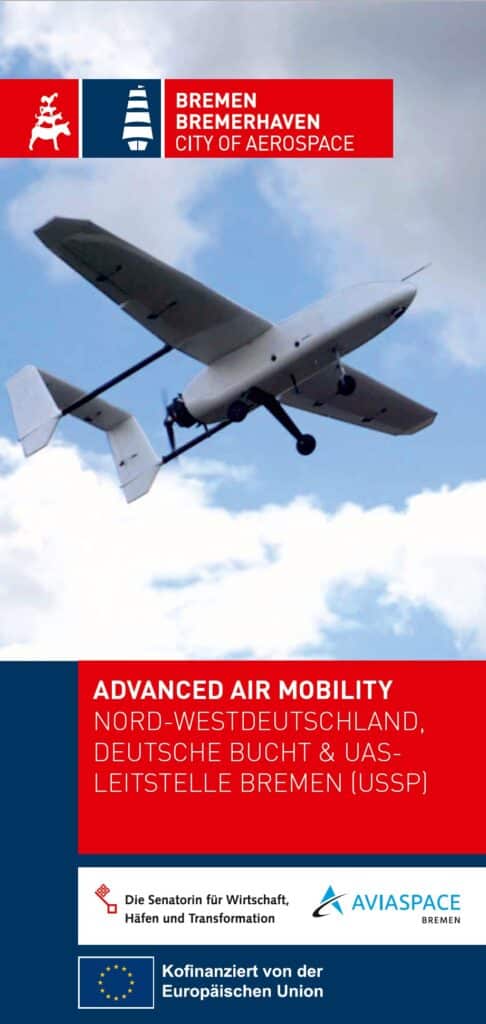
As part of the Bremen Bremerhaven City of Aerospace innovation cluster, the state of Bremen successfully supports companies and research institutions in the development and application of unmanned aerial systems (UAS). Expertise has been built up in the development and production of hardware and software systems, aircraft design, avionics, navigation and sensor technology. At the same time, the focus is on applications of UAS for the fulfillment of a wide range of tasks, such as the execution of sovereign tasks in the German
Bay through the use of drones as carriers of sensor technology or the establishment of ground stations for UAS. With the support of the Advanced Air Mobility (AAM) Initiative Nordwestdeutschland and Deutsche Bucht & UAS-Leitstelle Bremen (USSP), the state of Bremen will promote the further development of the UAS activities of the stakeholders based in the state in collaboration with
Lower Saxony further.
BREMEN
AEROSPACE LOCATION
In the aerospace industry, more than 140 companies and 20 institutes with around 12,000 employees generate more than 4 billion euros per year. In terms of population, Bremen has the highest employment density in these sectors in Germany. Future-oriented jobs, especially for highly qualified people, characterize the aerospace industry
and the aviation sector. Cutting-edge research in the state of Bremen provides sustainable support for industry in areas such as materials science and production technologies, space systems, remote sensing, bionics and robotics.
ADVANCED AIR MOBILITY INITIATIVE
OVERALL OBJECTIVE OF THE PROJECT
The aim of the initiative (AAM-NW) is the successive development of airspace structures within which the operation of UAS is considerably simplified and automated and safety is increased, taking into account all relevant airspace users. The aim is to gather experience for the creation of future highly automated operating strategies by linking and integrating UAS Traffic Management (UTM) into existing Air Traffic Management (ATM) systems.
The state of Bremen, with the focus on the UAS control center, and the state of Lower Saxony, with the focus on the flight areas and aeronautical infrastructures, are cooperatively involved here to support the joint upgrading of the airspace for Advanced Air Mobility.
The main players in this project are: Aviaspace Bremen e.V., b.r.m. IT & Aerospace GmbH, Droniq GmbH, Flugplatz Oldenburg-Hatten GmbH, Flugschule Borkum GmbH, Fraunhofer IFAM, Offshore-Drone-Campus-Cuxhaven (ODCC), Optoprecision GmbH.
In addition, the group of affected stakeholders now comprises over 200 players who are involved in the overall project in various ways.
Furthermore, the other northern German federal states (Mecklenburg-Western Pomerania, Hamburg and Schleswig-Holstein) will be integrated in an additive manner, i.e. the planned federal states will develop suitable structures in parallel in order to cooperate with AAM-NW at a later date.
INTRODUCTION
Advanced Air Mobility (AAM) is primarily understood to mean the integration of unmanned or autonomous aircraft into a common airspace with manned aviation, which offers the possibility of "connecting both metropolitan and rural regions quickly, safely, sustainably and affordably, independently of existing ground-based transport infrastructures".1 However, smaller UAS2 are also suitable for taking on certain monitoring and transport tasks, particularly in rural regions.
The German Bight, its islands and neighboring coastal countries offer great potential for testing the operational processes of unmanned aviation with initially lower-risk missions and (smaller) aircraft out of sight and integrating them step by step into existing manned aviation. Particular attention must also be paid to shipping and nature conservation in the German Bight.
A successively accumulated wealth of experience through regular UAS operation allows the continuous testing of operational arrangements up to the highly automated coordination of flight movements by a central control center and at the same time promotes confidence in this new technology. This is where the project comes in. Subsequently, the generated know-how will be transformed into areas and missions with higher risk, e.g. in urban areas, higher payloads and also people on board.
TIME HORIZON AND EXPANSION STAGES
Common to all phases is the successive development of the corresponding BVLOS (beyond visual line of sight) flight areas. The focus here is on the use and illumination of the very low level airspace (VLL). For the respective expansion stages, coverage by the air situation picture is to be achieved and successively expanded. The corresponding visibility of manned general aviation, air rescue, authorities and organizations with security tasks (BOS) and UAS in BVLOS and VLOS (visual line of sight) operations must be mutually ensured, tested and verified. Especially as these activities require a test operation prior to real operation.
Phase 0 - 2023 Preliminary work of the initiative: Compilation and integration of all relevant airspace participants
Phase 1 - 2024: BVLOS areas Hatten - German Bight incl. trial operation (red map area)
Phase 2 - 2024-2025: BVLOS areas Cuxhaven & Helgoland incl. connection to phase 1 incl. trial operation (blue and green map area)
Phase 3 - 2026-2028: Expansion and connection of further airfields such as East Frisian Islands, Leck and Nordholz incl. trial operation (yellow map area) "From separation to integration"
Phase 4 - Vision 2030 Further development in the respective built-up U-Space(s) towards a seamless connection to the "U4" of the SESAR ATM master plan from 2035 onwards
UAS CONTROL CENTER BREMEN (USSP)
Whether for industrial, university, government, security or civilian purposes: the use of
The number of drones will rise sharply in the coming years and will very likely even exceed the volume of manned air traffic. Coordination requires centralized bodies that can initiate collision avoidance and corresponding evasion procedures for unmanned aviation. The EU DVO 2021/664ff provides for a USSP (USSP = U-Space Service Provider), which provides aeronautical services (e.g. flight permits and activation) digitally for drone operators. To enable the AAM NW to contribute to the digital transformation of aviation in this sense, the establishment of a UAS control center (USSP) is planned from Bremen. This control center can protect manned aviation during urgently required missions in VLL airspace through real-time coordination and at the same time open up airspace utilization potential for unmanned aviation.
You are currently viewing placeholder content from Turnstile. To access the actual content, click the button below. Please note that doing so will result in data being shared with third-party providers.
You are currently viewing a placeholder content from Facebook. To access the actual content, click the button below. Please note that doing so will share data with third-party providers.
You are currently viewing a placeholder content from Instagram. To access the actual content, click the button below. Please note that doing so will share data with third-party providers.
You are currently viewing a placeholder content from X. To access the actual content, click the button below. Please note that doing so will share data with third-party providers.