Category: U-Space Service Provider

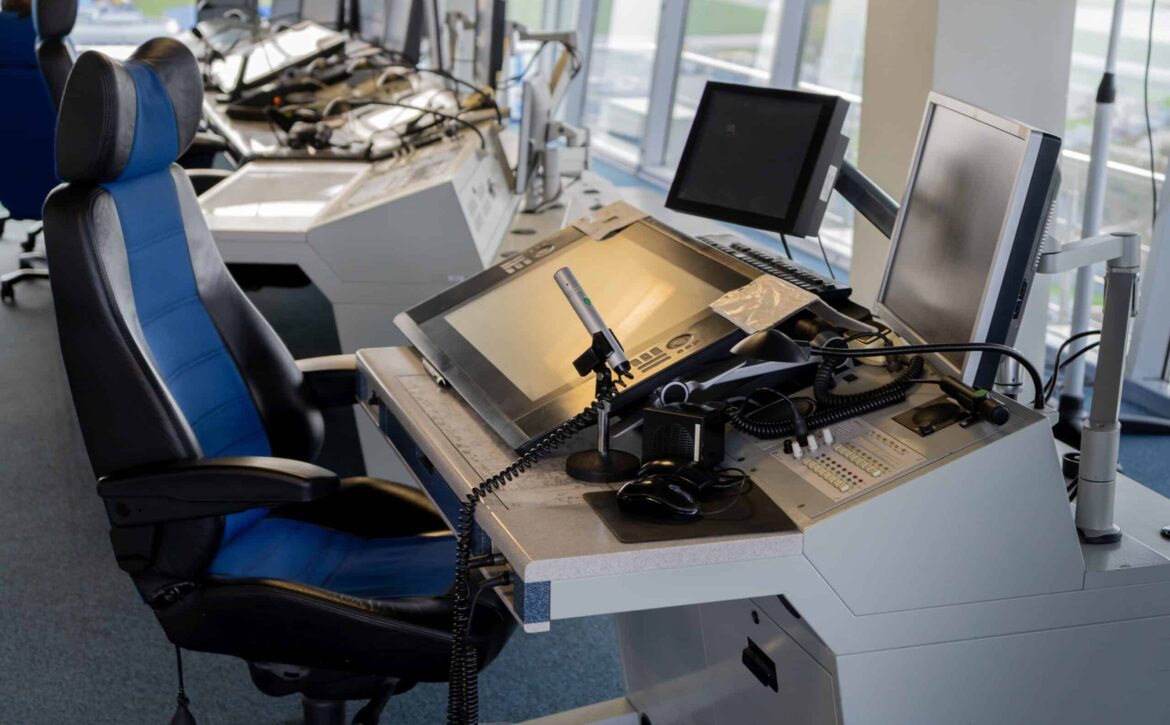
The workplace of the flight dispatcher in the airport. Flight control tower. Aviation background. Air Traffic Manager. Armchair and remote control with screen

U-Space - the European UTM approach

The USSP uses various safety systems to integrate drones into manned air traffic, including the UTM, which makes this task much easier.
U-Space - the European UTM approach

What is U-Space?

U-space is the airspace element for unmanned aerial systems (UAS). This will be incorporated into the existing airspace, which was predominantly used by manned aircraft. To ensure that this integration runs smoothly and sustainably, the European Aviation Safety Agency (EASA) requires important safety and coordination posts. One of these is the U-Space Service Provider (USSP), which supports the UAS operator and provides remote pilots with information regardless of the operating mode (VLOS, EVLOS and BVLOS). The USSP is therefore part of the European UTM concept - called "U-Space".

What is a UTM?

Unmanned Traffic Management, or UTM for short, is a safety system designed to automatically regulate and simplify drone traffic. According to the European Organization for the Safety of Air Navigation (EUROCONTROL), this will create a long-term drone ecosystem in Europe that will also facilitate the integration of unmanned into manned air traffic. The UTM identifies drones, e.g. by means of remote ID, and supports the creation of flight plans, which the remote pilot forwards to the USSP. The Unmanned Traffic Management also warns of special airspace elements, such as no-fly zones, which lie on the flight routes of the respective drones. The display of the air situation picture is also part of the range of tasks.

Advantage for integration of BVLOS/VLOS in manned aviation

The UTM is an extension of Air Traffic Management (ATM), which is already used in manned aviation. It facilitates and accelerates the organization of unmanned air traffic. Furthermore, automatic detection is independent of the operating mode so that the exchange of information is not slowed down or disrupted. The combination of the advantages of the latest rules for ATM and the UTM thus ensures the integration of unmanned air traffic into manned air traffic. As a result, drone flights will become routine in the future and at the same time participate in manned air traffic.
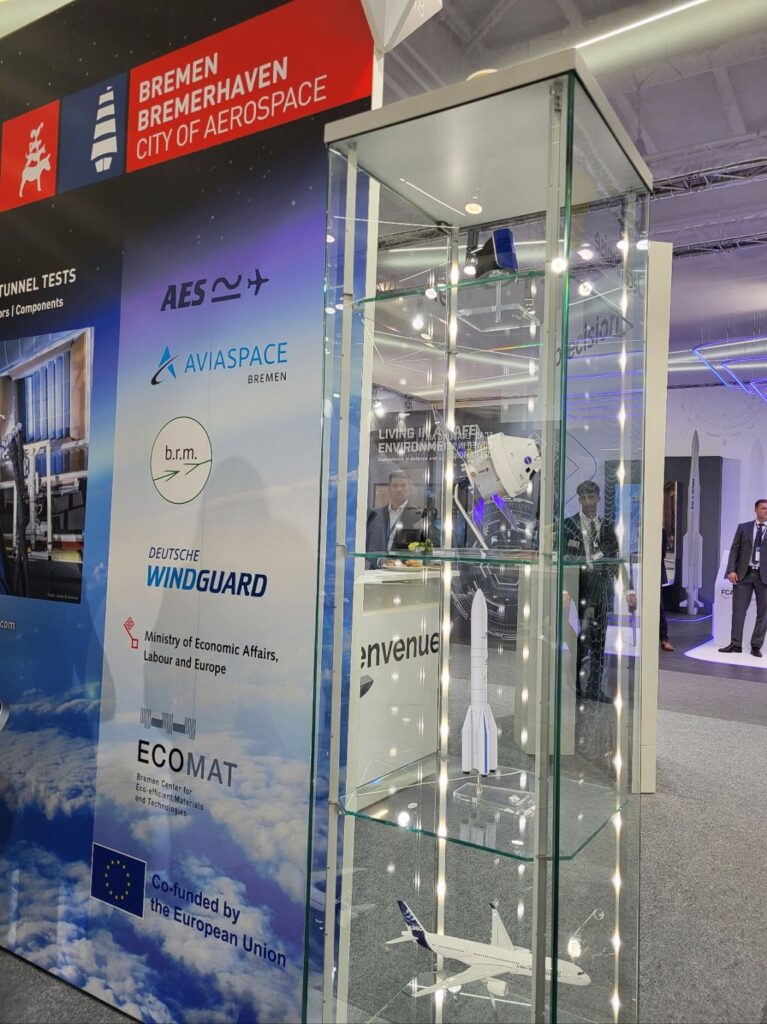
Two fascinating days, Paris Air Show

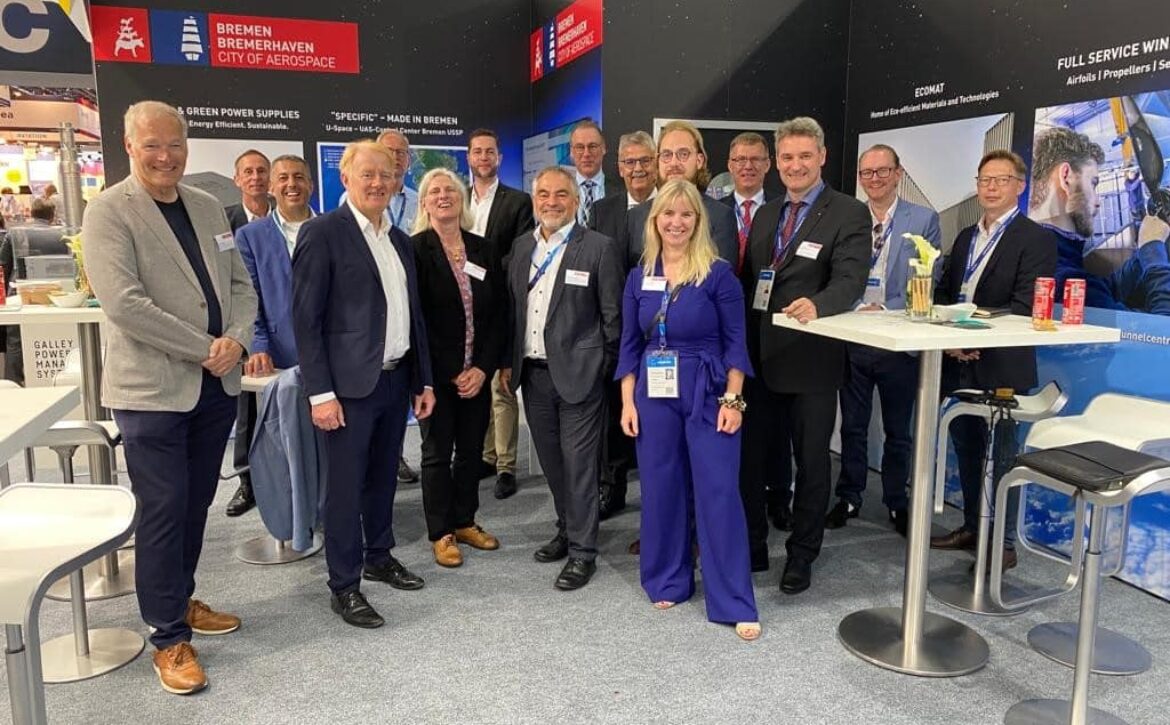
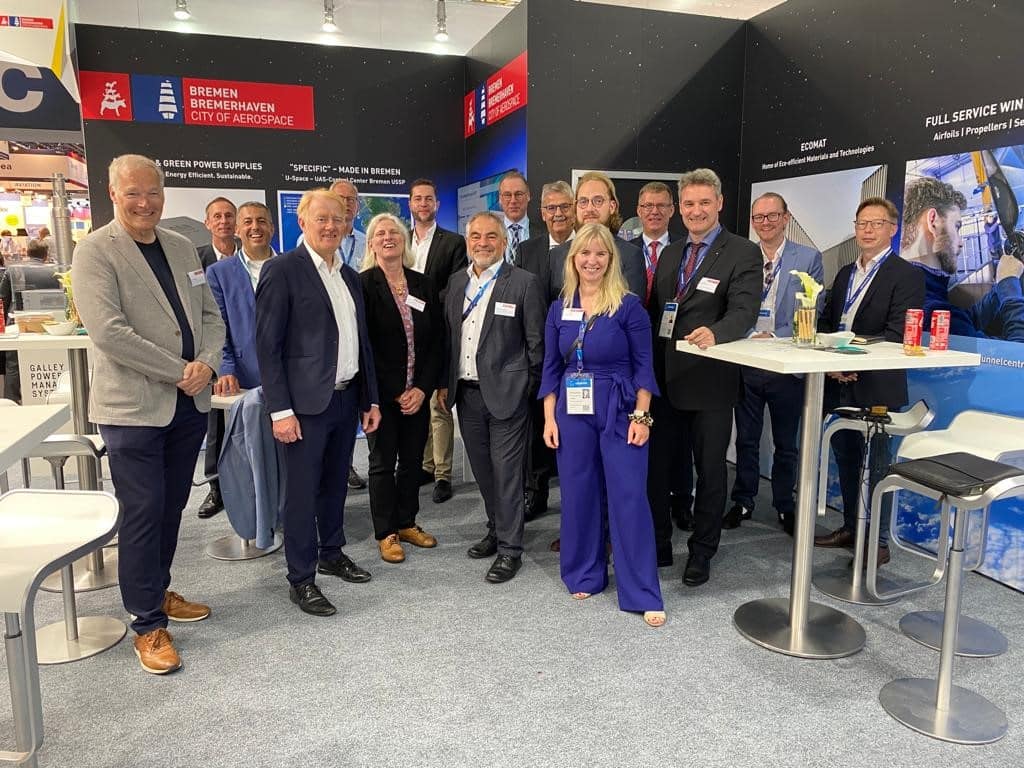
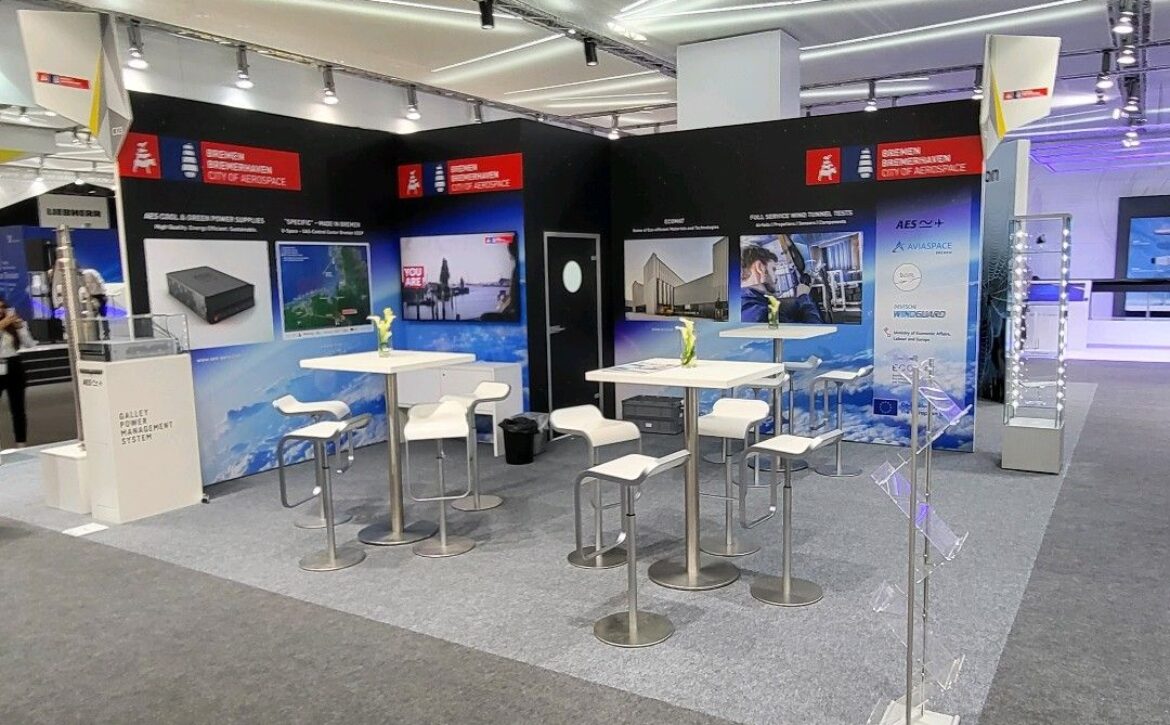
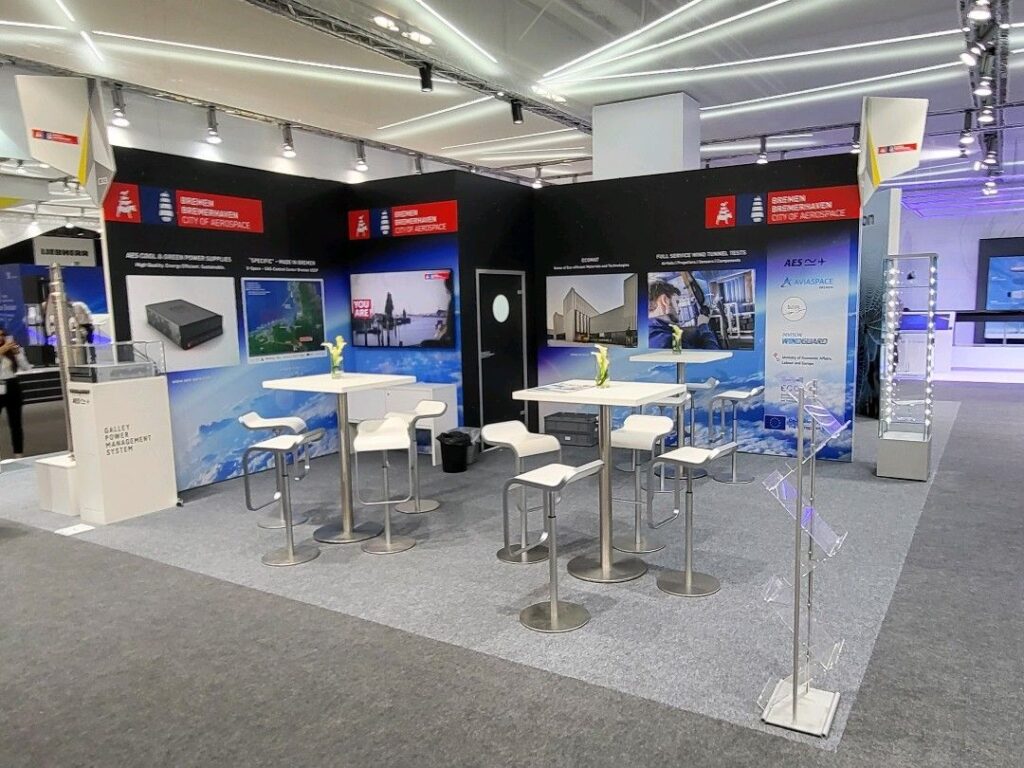
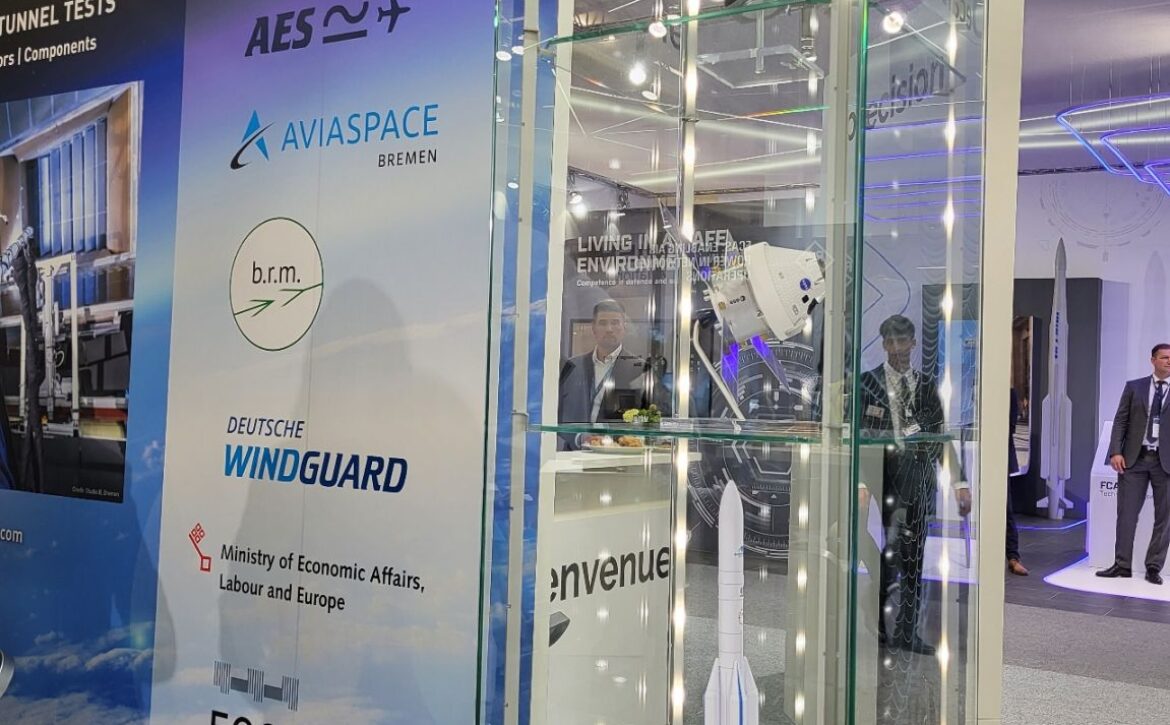
Two fascinating days are behind us, the b.r.m. IT & Aerospace, and the Paris Air Show is far from over. I would like to take this opportunity, Markus Rossol, with b.r.m . IT & Aerospace would like to thank the stand partners of the "Bremen City of Aerospace" stand for their great cooperation!

If you have not yet had the opportunity, we invite you to visit us today in Hall 2C at Stand C323 to find out more about the "U-Space Reallabor Nord-Westdeutschland und Deutsche Bucht & die UAS-Leitstelle Bremen (USSP)".

You are also welcome to visit our partner Fraunhofer IFAM in the U-Space NW project.

AVIASPACE Bremen e.V. WFB Bremen Economic Development Corporation Senator for Economics, Labor and Europe AES Aircraft Elektro/Elektronik System GmbH Deutsche WindGuard GmbH ECOMAT

Many thanks for the great support from everyone involved.

Paris Air Show Day 1

The first successful day at the Paris Air Show is now over. The b.r.m. IT & Aerospace, represented by Markus Rossol, was able to hold many interesting discussions with international interested parties.

The "City of AEROSPACE" from Bremen concludes with a positive summary of the first day.

We were also able to welcome a special guest here in Paris. Andreas Mattfeldt MDB paid us a visit at the Bremen joint stand to discuss the public effectiveness of the project idea, U-Space Reallabor Nordwestdeutschland & Deutsche Bucht - UAS Leitstelle Bremen USSP.

Markus Rossol: "It's about making commercial BVLOS drone operations usable, on and offshore. b.r.m. IT & Aerospace and its partners have the right concept to make this possible in a secure and integrated manner"

We are therefore full of anticipation for the second upcoming day in Paris. We look forward to many more discussions and interest in the "CITY of AEROSPACE".

Why not visit our joint Bremen stand in Hall 2c, Stand C 323 at the Paris Air Show 2023?

Hello from the Paris Air Show!

To mark the revival of the PAS after the break, I am particularly pleased to be presenting the "U-Space Reallabor Norddeutschland und Deutsche Bucht & UAS-Leitstelle Bremen USSP" with b.r.m. IT & Aerospace to present the "U-Space Reallabor Norddeutschland und Deutsche Bucht & UAS-Leitstelle Bremen USSP".

I look forward to many exciting discussions at the joint stand Bremen City of Aerospace
AVIASPACE Bremen e.V.Deutsche WindGuard GmbH Freie Hansestadt Bremen - Der Senator für Wirtschaft Arbeit und Häfen WFB Wirtschaftsförderung Bremen GmbH ECOMAT

Paris Air Show 2023

The Paris Air Show is one of the most important air shows in the world. It takes place every two years at the Le Bourget airfield in the northern part of Paris. This year, the Paris Air Show will take place from Monday, 19.06 to Sunday, 25.06 and is organized as usual by the French aviation association GIFAS.

b.r.m. IT & Aerospace will also take part in the Paris Air Show 2023.

Paris Air Show 2023

The Paris Air Show is the largest European industry gathering and is known for its exhibitions and air shows. The seven-day trade fair is divided into two parts. The first four days are reserved for professionals from the aviation industry. On the last three days, the fair is open to the general public. The event will not only focus on manned aviation, but also on unmanned aviation, its future applications and opportunities for improvement. A map of the event can be found here.

b.r.m. at the Paris Air Show

In addition to international companies, German institutions and companies will also be at the trade fair to present their technological innovations.

Bremen is in!

"City of Aerospace" is represented by AVIASPACE Bremen e.V.. In addition, the Bremen-based company b.r.m. IT & Aerospace with the joint idea of a U-Space Reallabor Nordwestdeutschland & Deutsche Bucht - UAS Leitstelle Bremen USSP, OptoPrecision with the UAS VTOL-EGM, IFAM Fraunhofer with the maritime test fields, Droniq and the Hatten-UAS test center, which is located at the Oldenburg-Hatten airfield between Oldenburg and Bremen, are also taking part in the Paris Air Show.

We present the first results of the USSP feasibility study on the future establishment of the b.r.m. UAS control center Bremen (USSP)". USSP is the abbreviation for U-Space Service Provider.

The BVLOS flight area of 3600 QM is presented, the digital visibility of unmanned UAS and manned aircraft, the sustainable data center (GREEN IT) and the measures on the important topic of "cybersecurity" and "GDPR" are presented.

Maximilian Strauß, Markus Rossol and Harald Rossol will be demonstrating and explaining all this in more detail at the Paris Air Show.

We look forward to your visit at our booth Hall 2c C 323 Germany Pavilion

abstract background of futuristic technology screen scan flight

Automatic subscriber monitoring (ADS-B)

A lot of technology is used to improve airspace surveillance. This includes the ADS-B, which performs many tasks. This is used for both manned and unmanned air traffic.

Automatic subscriber monitoring (ADS-B)

Automatic Dependent Surveillance - Broadcast is used so that air traffic control can obtain a clearer picture of the airspace and use this information to increase safety. The combination of satellite navigation systems, the systems on board the aircraft itself and the systems on the ground creates very precise information and data. This in turn is necessary for air traffic control to communicate with the aircraft in the airspace.

This is also the case over the greater Oldenburg-Hatten airfield (EDWH) area. For Hatten-UAS, manned and unmanned systems are identified and recorded with the help of ADS-B. The recorded data will in future be processed by b.r.m. IT & Aerospace, as the future USSP. ADS-L, the asymmetric digital subscriber line, is also currently being implemented for the Hatten-UAS drone test center. This was published by EASA in December 2022 as the ADS-L standard.

If you have any further questions, please do not hesitate to contact our UAS consultant, Mr. Markus Rossol.

How does the ADS-B work?

The aircraft usually determine their position using GPS and transmit this, together with other basic data, to other aircraft and ground stations. Data is transmitted between aircraft via air-to-air links. Networking between the aircraft and the ground station, such as radars or air traffic control, is called an air-to-ground link. Air traffic control on the ground processes the data from the ADS-B output and forwards it back to the aircraft via ADS-B input. This gives the pilot the same overview as air traffic control. Automatic Dependent Surveillance - Broadcast is therefore significantly better than the information from radars.

For this reason, Automatic Dependent Surveillance - Broadcast is also an important part of the Due Regard Radar, for example, which is the key component for a Detect and Avoid architecture. ADS-B and the Traffic Collision Avoidance System (TCAS) are used to detect and track cooperative transponder-equipped aircraft.

Quadcopter drone flying

Flying maneuvers with drones - Film industry

Drones are used for a wide variety of purposes. There are different flight maneuvers for the respective task of the drone. Drones are also increasingly being used for advertising purposes with cameras. The following 10 maneuvers are among the most commonly used for this purpose.

Flight maneuvers

Simple flight maneuvers for all kinds of shots

For linear shots, which are typically used for transitions in videos, the operator steers the drone forwards or backwards at a constant speed. He usually uses the right stick to keep a constant view of the subject with the camera.

To illustrate the depth of a landscape, for example, you mainly use diagonal maneuvers. These are created by combining both sticks. The left stick is responsible for the flight altitude and the right stick for the horizontal direction. This results in a diagonal flight path. The drone can also be panned slightly with the left stick. This makes it possible to combine several motifs.

A dynamic one can be filmed with drones flying sideways, among other things. To do this, move the right stick to the left or right. It is important to note that the movement should be smooth and the subject should remain in the camera's field of vision during this flight maneuver. This maneuver is challenging.

It is particularly easy to orbit a subject smoothly with drones. To do this, move both sticks in the desired direction and create circular paths in an anti-clockwise or clockwise direction. This maneuver can also be performed in a spiral by using the left stick to move the drone up or down. The movement of the right stick should be slower in order to focus on the subject.

In a drone shot, the drone flies backwards and rises in the process. This increases the angle of view of the subject. To do this, press the left stick upwards and the right stick downwards. To do this, however, the camera's swivel arm must be at the same angle as the flight maneuver. For a certain dramatic effect in landscape shots, the drone flies vertically upwards. To do this, press the left stick upwards and point the camera downwards. This maneuver is called Rocket.

The pilot first flies the drone forwards and zooms out with the camera. If he then flies backwards and zooms in with the camera, a so-called vertigo effect is created, which is generated by the dollie zoom recording maneuver. Last but not least, there are overview shots in which the pilot moves the right stick up or down. At the same time, the camera is slowly tilted downwards.

You can also find more posts on our Instagram account.

Milestone for the U-Space real-world laboratory North-West Germany and the German Bight

State of Lower Saxony grants BVLOS ascent permit for a 3600 square kilometer area for drone testing

Milestone for the U-Space real-world laboratory North-West Germany and the German Bight

Bremen, 30.05.2023: The state aviation authority of Lower Saxony has now granted permission for BVLOS (Beyond Visual Line of Sight) flights of UAS (Unmanned Aircraft Systems) in north-western Germany. The approval is a further milestone in the development of the project, which is being driven forward by Bremen-based b.r.m. IT & Aerospace in North-West Germany and the German Bight. b.r.m. IT & Aerospace is regarded as a leading developer of comprehensive digital services, including for BVLOS flights, which the company offers its customers as a future U-Space Service Provider (USSP).

The permit holder is Flugschule Borkum GmbH. Alongside Bremer b.r.m. IT & Aerospace with the new Hatten-UAS drone test center and the Oldenburg-Hatten airfield (EDWH), it is part of the group of companies owned by Bremen entrepreneurs Harald and Markus Rossol.

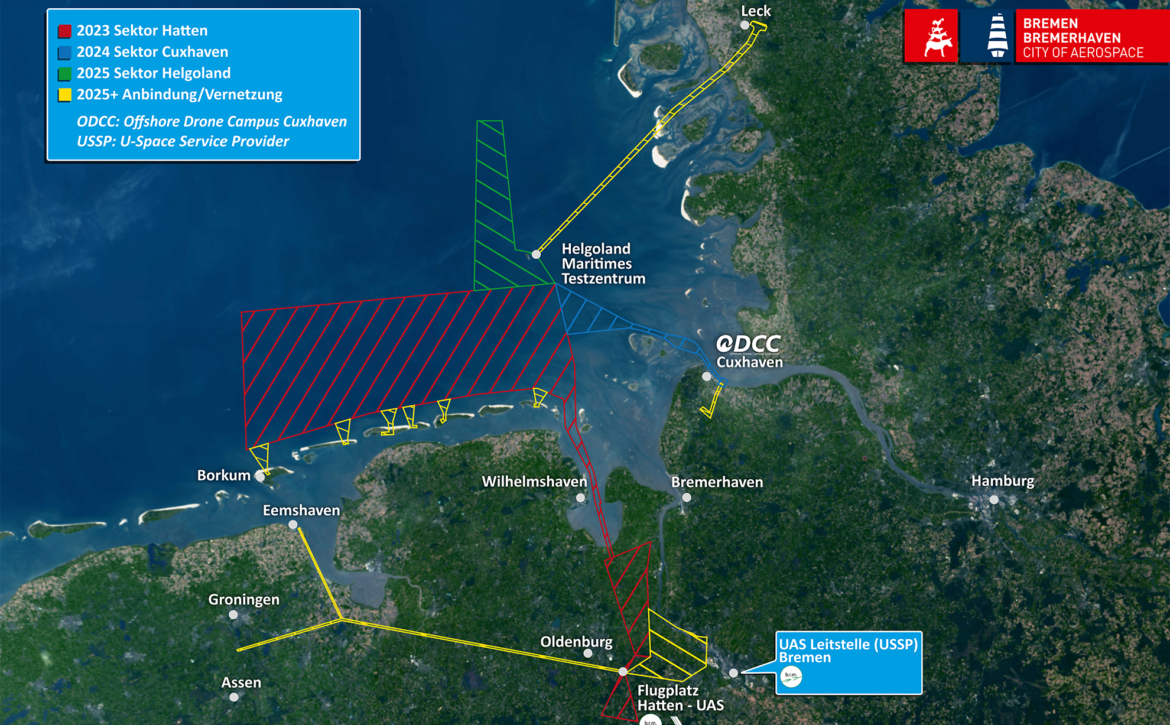
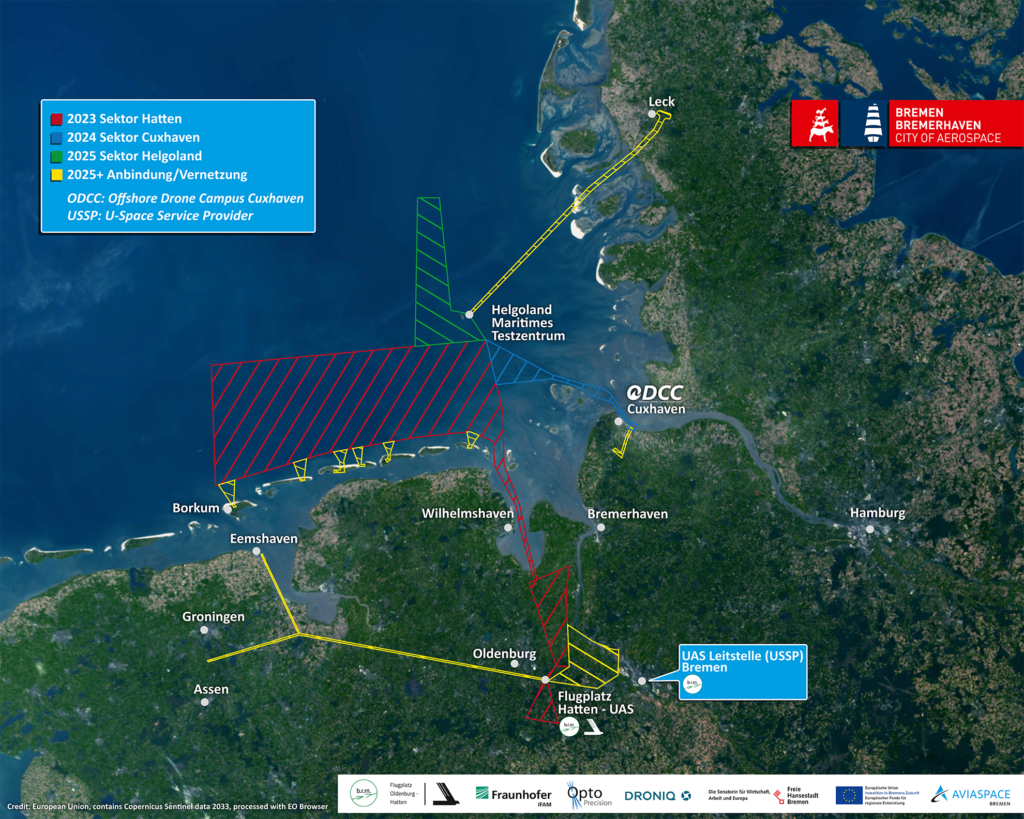
The permit for BVLOS drone operations covers a total area of 3600 square kilometers. It extends with a corridor over largely uninhabited areas from Hatten-UAS at the Oldenburg-Hatten VLP across the Jade Bay to the North Sea. North of the East Frisian Islands, it extends as far as the Dutch border (see diagram). The height limit is 120 m.

"The approval is an important step for us on the way to becoming a real laboratory for North-West Germany and the German Bight," says Markus Rossol, Managing Partner of b.r.m. IT & Aerospace. "It also paves the way for the more effective development of solutions for the orderly and coordinated coexistence of UAS from industrial, university and other civil operators and manned aircraft within the existing airspace structures."

Markus Rossol continues: "We are pursuing an integrative approach to drone operations as part of the U-Space Reallabor North-West Germany and German Bight, for which a strict spatial demarcation between UAS and manned aircraft is not a mandatory requirement. As a U-Space Service Provider, we are planning to set up the UAS Control Center Bremen (USSP) in our sustainably operated data center, through which we will offer our customers all the services required for drone operations under VFR, IFR and night VFR conditions. The aim is to significantly simplify coordination and automate UAS operations while increasing safety."

The approval from the Lower Saxony State Aviation Authority currently relates to test operations with the OptoPrecision VT-4 "Rochen". The UAS with a speed of up to 180 km/h, a flight mass of 100 kg and a range of 600 km was developed primarily for environmental monitoring. Systems such as ADS-B and FLARM are integrated into the UAS for mutual recognition in airspace and, if necessary, automated safe evasive maneuvers.

"We are very pleased that we have now acquired further well-known customers whose UAS we can easily include in the scope of approval with our expertise," says Markus Rossol. "Our unique combination of IT, USSP services and the provision of aeronautical infrastructure underpins our role as a leading service provider for the thriving UAS sector."

Would you like to find out more? Please contact us.

Airspace integration workshop of the UAM-Inno-Region-SH

Airspace integration workshop
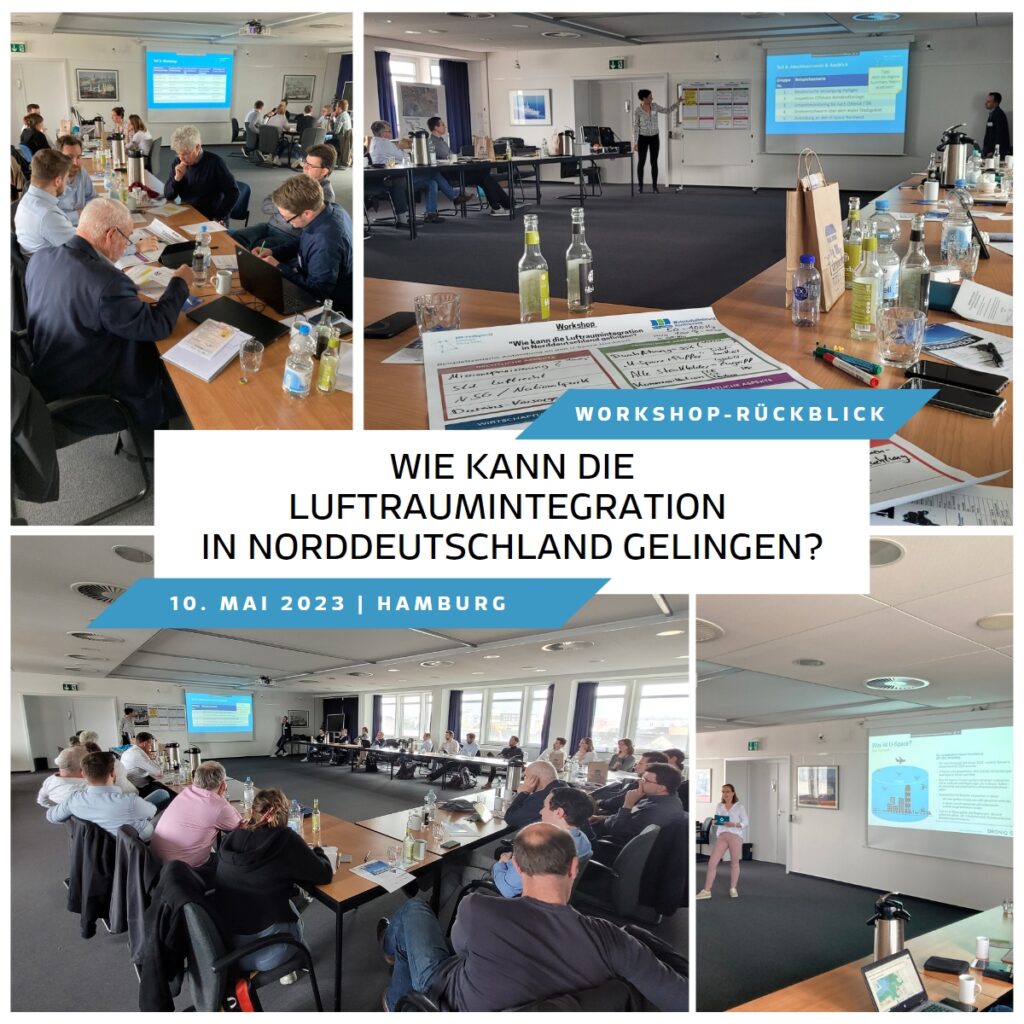
Impressions of the workshop, image source: Wirtschaftsförderungsgesellschaft Nordfriesland mbH

The workshop was held at the Hamburg Ministry of Economics and Innovation. Experts from various sectors came together on this day to discuss the integration of drones in their specialist areas. These areas of research include, for example, sea rescue, medical care and environmental monitoring.

Joint solution strategies for the UAM-Inno-Region-SH and U-Space NW

Together with Tim Strohbach from IFAM, founder and Managing Director Harald Rossol reported on the UAS Control Center Bremen (USSP) and the "U-Space Real Lab North-West Germany and German Bight". The two experts explained how integration can be successful. A further briefing on the current and future project phases was followed by an intensive exchange in groups, which were divided up according to example scenarios. One major topic was medical care for the Halligen islands in the North Sea. Drones are the perfect solution here: fast and uncomplicated. This group also included Markus Rossol, board member of UAV Dach e.V. for the area of air and ground infrastructure.

Furthermore, the experts at the UAM-Inno-Region-SH workshop also discussed the connection of Schleswig-Holstein to the U-Space NW. Harald Rossol from b.r.m. and Tim Strohbach from Frauenhofer IFAM were the most experienced experts in this field. Together they developed the U-Space Reallabor Nord-Westdeutschland und Deutsche Bucht, a research project for the integration of drones into manned airspace. You can find more information about this project here.

Business man is working in Aviation industry office

EASA - Updated Easy Access Rules for ATM and ANS

On 09.02.2023, EASA published its new Easy Access Rules for Air Traffic Management (ATM) and Air Navigation Services (ANS). This published document now contains all applicable rules for ATM/ANS. The SORA 2.5 workshop took place at the same time. You can find the blog post here. This blog post deals with the new changes that were not available in the old version.

EASA - Updated Easy Access Rules for ATM and ANS

Changes to content

The Updated Easy Access Rules contain the EU Commission Regulation 2017/373 and all subsequent amendments, including the renewal of the AMCs and GMs. The latest version also includes ED Decision 2022/023/R of December 2022, which explains the AMCs and GMs for standardized safety for the integration of UAS and other unmanned air traffic participants in the integration of U-Space into manned air traffic. It states that U-Space service providers such as b.r.m. IT & Aerospace as the Bremen UAS Control Center (USSP) are absolutely essential for safe integration. They should be the basic building block under an EU-wide standard by securing the entire airspace with the help of information exchange. Furthermore, each USSP should offer uniform certification and support processes for the UAS so that full integration into manned airspace can run smoothly. Further definitions of terms and tasks can be found in the current version. This is available for download on the EASA website in the desired format.

Future changes to the Easy Access Rules

Together with other European implementing regulations, such as Regulation 2021/665, the previous Easy Access Rules for ATM and ANS have been significantly expanded. Furthermore, these rules are regularly updated by EASA to ensure that they are always up to date. As these rules will change again and again due to upcoming regulations, EASA publishes the latest document as an official PDF document. In addition, EASA promises to have created a clearer and easier-to-read presentation. These are also explained with integrated links and bookmarks. EASA has also created a list of revisions on its website. This means that the latest changes to the rules can be identified immediately.