Air traffic - civil drone types
It's easy to lose track of the many different types of drones. These can be divided into three main categories according to the potential for personal injury. For the USSP, these are "Open", "Specific" and "Certified".
"Open" - no to low risk
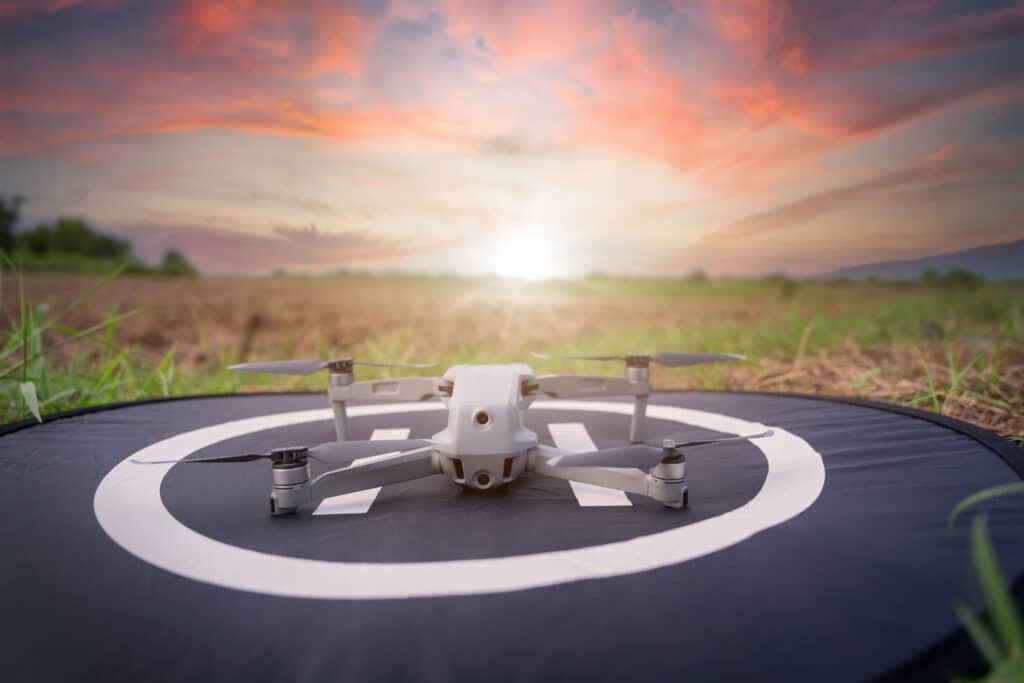
The drones in the "Open" category include small overflights under your own responsibility. There are also three sub-categories, which are initially divided according to weight class.
A1 includes drone types weighing less than 500 g. Toy drones weighing less than 250 g without a camera/sensor do not require registration or training. Drones weighing 250 g - 500 g require registration and proof of operation. It is not permitted to fly these drones over gatherings of people or bystanders.
500 g - 2 kg are included in class A2. These must be flown with a registration, instruction and corresponding test. Bystanders may not be flown over and a minimum distance of 50 m must be maintained.
Drones in sub-category A3 are drones weighing 2 kg - 25 kg, which may only be flown with registration, instruction and appropriate testing. It is not permitted to fly in the vicinity of bystanders. Furthermore, a distance of 150 m from other properties must be maintained.
"Specific" - risk class for special applications
Flight authorization from the National Aviation Authority (NAA) must be available for this category. It is also permitted to fly over crowds of people with a wingspan of less than one meter. The dropping of objects is also permitted. Two Standard Scenarios (STS) have been published to date.
The drone must be labeled accordingly for both levels. EASA also defines a predefined risk assessment (PDRA). In addition to this, a list of PDRAs has already been published in digital form on easa.europa.eu .
"Certified" - the highest security level
The last category describes large, transporting drones. They are approved for the transportation of people, goods and dangerous goods. There are also three types here for more precise differentiation.
Type 1 are international long-haul drone flights. They fly remotely under the supervision of EASA and are comparable to the size of an A320.
The second type comprises regional routes that are permitted with the aid of a USSP. This includes the remote-controlled transportation of goods or people.
The third type differs from the second only in that the pilot is physically on board.
If you have any questions about our UAS projects, please contact Maximilian Strauß or Markus Rossol.