Category: Technology

Data backup

Mail archiving according to GDPR

Nowadays, electronic archiving of emails and documents is the order of the day. In Germany, GDPR-compliant archiving is required by law. A distinction is made between audit-proof and legally compliant archiving.

Archiving according to GDPR

Audit security and legal certainty

As a rule, audit-proof systems are archiving systems that comply with tax and commercial law requirements and are verifiable in this respect. The information from the systems should be retrievable, traceable, unalterable and tamper-proof. For example, it enables tax authorities to check emails or other documents from the past in order to clarify facts. This means that the entire archiving process, including the technical components, must be checked beforehand, otherwise the user companies will not have any legal certainty for their archiving systems.

However, legal certainty includes accuracy, completeness, security of the overall procedure, protection against alteration and falsification, security against loss, use only by authorized persons, compliance with retention periods, documentation of the procedure, traceability and verifiability. Only when these categories are fulfilled after a practical test is the archiving system legally secure. Legal certainty is therefore a combination of audit compliance, the GDPR and other compliance rules.

Problem

GDPR-compliant archiving is mandatory for the user company and is properly audited. However, audit compliance is only part of complete legal certainty. This means, for example, that a user company may use a product with software that suggests audit compliance on the basis of a sticker but cannot actually guarantee it. This may be due to various components. This is precisely the core problem with legally compliant archiving. Revision security appears to be given in theory, but must first be proven in practice. Compliance can only be verified once the complete archiving system, consisting of the technology, organization, processes and trained employees, has been fully implemented. Legal certainty cannot therefore be guaranteed at the time of purchase, but only afterwards through a corresponding review of the complete system.

If you have any questions about GDPR-compliant archiving solutions and how we can support you with implementation, please feel free to contact Harald Rossol, founder and managing director of b.r.m. IT & Aerospace.

Businessman using a computer with Edge computing modern IT techn

IT trends: edge computing, data protection and security

Security and data protection are still among the top IT trends. However, there is also a new trend: edge computing.

IT trends: edge computing, data protection and security

Edge computing

Edge computing is one of the latest IT trends. In terms of data processing, it is the opposite of cloud computing. While cloud computing relies on a central data center, edge computing relocates the services, data, etc. close to the user. The calculations involved were initially carried out by the data center itself. However, in order to process the data streams in the data center as resource-efficiently as possible, the services, data, etc. were moved to the edge.

This allows data to be processed in real time and minimizes latency and load times. However, challenges must be overcome. With a cloud, the highest security standards and regular vulnerability checks have top priority. It therefore offers a higher level of data security than decentralized processing, as each operator is responsible for the security of their own device. Further information on edge computing can be found here.

Data protection and IT security

With the rapid increase in the use of data processing, the issue of security and data protection is becoming increasingly important. The significant breaches in 2021 clearly showed the damage caused by a lack of IT security. The threat of potential hacker attacks is real. It is therefore all the more important to maintain your own IT security by continuously checking and maintaining it.

The successful fulfillment of the topics of data protection (GDPR), security and energy efficiency form the basis for the IT service provider b.r.m. With a GDPR-compliant and Green IT-certified data center, we offer our customers an all-encompassing 24-hour service. For more than 30 years, we have been taking care of digitalization with our excellent IT service. With our multifaceted efforts, we try to stand out from other IT service providers and be unique in the industry.

You can also follow us on Instagram @brm_IT_Aerospace.

Cloud computing technology and online data storage in innovative perception

Cloud infrastructure

Cloud services are being used more and more frequently and intensively. It is important to know what a cloud is and how a cloud is structured.

Cloud infrastructure

How this infrastructure is structured

In short, the infrastructures create multiple external storage locations. A cloud infrastructure essentially consists of four different components. These include the hardware, virtualization, storage and the network.

Hardware is the physical elements of a cloud infrastructure. These include, for example, servers, routers, switches and much more. These can be in different locations.

Virtualization then connects the servers with each other. The software, which is located on the physical hardware, centralizes the computer's resources in so-called pools.

The data is then stored in storage rows on the numerous disks in a data center. Software is used to create a new backup and the outdated backup is removed. This ensures that data is retained in the event of a power failure, for example.

The last component of the cloud infrastructure is divided into physical and virtual networks. The physical part includes cables, switches and other devices. The virtual networks are built on the basis of the physical networks.

Cloud computing

The cloud infrastructure is the prerequisite for cloud computing. It provides IT resources via the internet. In addition, there are various models, which are explained in detail here. As this model can be described as an external location, the payload that was previously uploaded can be accessed by the user at any time.

Clouds are being used more and more frequently because they are very flexible and offer a large amount of storage space. However, cloud services are also a popular target for hacker attacks due to the amount of data they contain. Furthermore, the various cloud platforms are very questionable in terms of data protection. At b.r.m., our customers' data is optimally secured with the help of our GDPR and Green IT-certified data center. We also have a data protection officer who will be happy to answer any questions you may have.

Simulation screen showing various flights for transportation and

Detect and Avoid Radar

To improve safety in airspace, there are detection technologies that alert the pilot and then cause them to take evasive action. This technology will be particularly essential for unmanned air traffic. One example of such technology is the Detect and Avoid Radar and the Due Regard Radar. EASA is also proposing such systems.

Detect and Avoid Radar

Detect and Avoid Radar

The Detect and Avoid Radar (DAA) enables the operator of a remotely piloted flying object to safely integrate their unmanned system into non-segregated airspace. It improves the detection of the pilot through a system that surpasses the human eye in terms of range, probability of detection and accuracy.

This ensures increased flight safety and the detection of every flying object in the airspace. This technology is also weatherproof and can be used regardless of the weather.

Due Regard Radar

The Due Regard Radar (DRR) is an air-to-air radar designed to allow remotely piloted aircraft to fly in international airspace. The DRR consists of an Active Electronically Scanned Array (AESA) antenna with two panels and a Radar Electronics Assembly (REA). The system enables the pilot of the remote-controlled aircraft to recognize aircraft over the same field of view as a normal pilot. It virtually replaces the pilot's eyes. This technology allows the system to track multiple targets while continuing to search for new aircraft. Flight tests have been carried out with both manned and unmanned aircraft.

DRR is ultimately a key component of the entire aircraft Detect and Avoid architecture. The DAA must be able to detect aircraft with and without transponders and then take evasive action. The detection and tracking of cooperative (transponder-equipped) aircraft is performed, for example, by the Traffic Collision Avoidance System (TCAS) and the Automatic Dependent Surveillance-Broadcast (ADS-B).

You can also follow us on Instagram @brm_IT_Aerospace.

vector 3d background. communication satellite in a volumetric tr

SAR - Radar with synthetic aperture

SAR was developed to avoid having to install huge antennas on every flying object. This invention is particularly useful for smaller UAS.

What exactly is that?

Synthetic aperture radar (SAR) is an imaging technique that generates 2D and 3D images from radar reflections from the ground. SAR has considerable advantages as it relies on radio instead of visible light. This allows the radar to see through difficult conditions such as haze, clouds and dense forest canopies.

The German Aerospace Center describes how SAR works on a satellite as follows. A single antenna transmits pulses at regular intervals, the echoes of which are received again. Once the echoes have been fully digitized and stored, the data is transmitted to the ground station. This in turn is treated with a complex computing process called "aperture synthesis". This involves arranging the individual virtual antennas and combining them into one large antenna. In this way, the SAR produces the same effect that would be achieved with a long antenna.

There are three different operating modes for sensors that work with X-band. The "Spotlight" mode is suitable for an area measuring 10 kilometers by 10 kilometers with a resolution of 1 to 2 meters. "Stripmap", on the other hand, is suitable for a 30-kilometer-wide strip with a zoom of 3 to 6 meters. The "ScanSAR" can capture a 100 kilometer wide strip with a resolution of 16 meters.

Who uses the SAR?

Due to its special technology, it is now standard for earth observation and remote sensing. However, it is mainly used in the military. The combat drones remotely controlled by satellites are made visible on the monitors using this technology, among other things.

However, the SAR can be used not only for military operations with large combat drones, but also for civilian drone types. Due to its small size and low weight, it can be used for many types of drones.

Black Network port - cable socket icon isolated on white background. LAN, ethernet port sign. Local area connector icon. Set icon in color square buttons. Vector Illustration

NAT and PAT

NAT and PAT technology is used to replace an Internet Protocol address (IP address) with IP data packets. But what exactly is it, how does it work and how secure is this solution?

NAT and PAT

What is NAT?

Network Address Translation (NAT) acts as a translation of an IP address used in one network into another IP address used in a different network. It converts a public IP address into several private IP addresses. Each outgoing connection is read with an IP address and port number. The NAT can then use the specified port number to assign incoming data to a local station. However, this assignment is only valid for a short time.

A distinction is also made between source NAT (SNAT) and destination NAT (DNAT). With a SNAT, the source address is exchanged, which is typical for private Internet access. However, a destination NAT (DNAT) is used to change the destination of an IP packet. The DNAT is usually used to change a public IP of an Internet connection to a private IP address of a server in the private subnet. SNAT and DNAT can be used individually or together for an IP packet.

What is PAT?

Port address translation enables several devices in a local area network (LAN) to be mapped to a single public IP address. This technology is therefore an extension of NAT. In this way, many IP addresses are saved. PATs are used in most home networks.

How safe is this technology?

In terms of IT security, there are few security concerns with NAT. As the end devices are hidden behind a router, i.e. in a private network, from the public Internet, the systems cannot be reached from the Internet. A direct Internet connection is only required when the end devices establish a connection. Although this technology cannot replace a fully-fledged firewall or packet filter, the protection is comparable to a rudimentary firewall.

If you have any questions about more detailed information on these techniques, the b.r.m. staff will be happy to help. You can also read more on this website.

Information and communications technology with downtown Los Angeles

ICT Trends 2022

In the age of digitalization and automation, there are always new ICT trends in the world of work. At the end of the year, market researchers, consultants and other experts present their assessments of the trends.

ICT Trends 2022

What is an ICT trend?

An ICT trend describes a tendency in information and communication technology. This creates technical gaps, new opportunities, but also challenges. As every new or old trend has an impact on the world of work and must also react to current circumstances, changes can occur quickly.

For example, the coronavirus pandemic has led to a significant increase in hybrid working and digital meetings. This change calls for new business models and technologies, but these were very limited due to supply bottlenecks.

Working from home and virtual meetings have put a lot of strain on the IT industry during the lockdown. As a result, the issue of IT security and data protection was initially a disaster with far-reaching consequences.

The shortage of skilled workers has been one of the ICT trends for many years. As a result, many companies are striving to optimize their processes and automate their activities on a large scale.

According to experts, the use of cloud infrastructures and their services is set to increase further. These are particularly attractive for companies due to the savings and flexibility they offer. In addition, hybrid cloud strategies offer a promising solution. They are a combination of a service application (SaaS) and on-premise data centers. In this way, data protection and the security of exponentially increasing data growth can be guaranteed.

There is also a democratization of technology. Knowledge and skills are becoming more accessible thanks to high-tech platforms. Process automation and open-source AI applications encourage people to contribute their views and expertise and develop solutions. Democratization thus creates basic innovations throughout the organization that provide practical and cultural support.


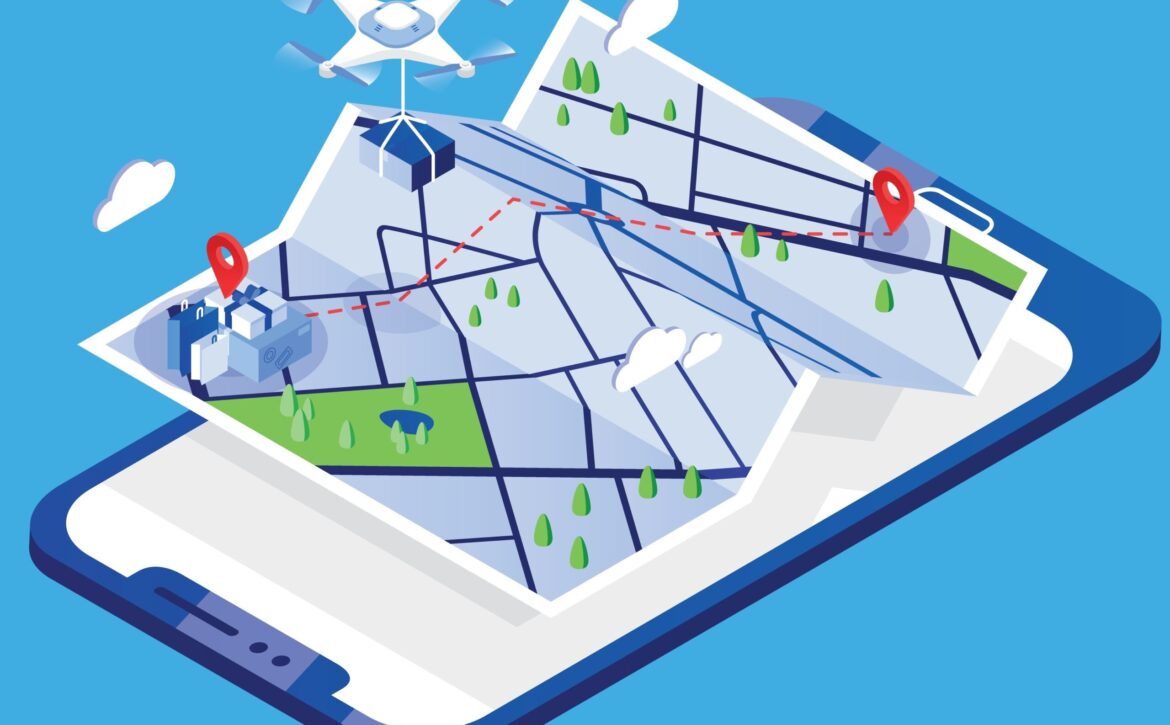
Drone carrying parcel and flying above paper city map and giant mobile phone. Delivery or shipping service with automatic quadrotor, modern electronic device. Colored isometric vector illustration.

Transponder obligation and identification obligation in airspace

According to German Air Traffic Control (DFS ), certain rules apply to the transponder obligation and recognition obligation in airspace. Both obligations are intended to make airspace safer by preventing collisions.

Transponder obligation and identification obligation

An aviation transponder is an electronic device that communicates via radio frequency interrogation. It provides important information for air traffic control (ATC) and the collision avoidance systems (ACAS) of other aircraft.

A secondary surveillance radar and an ACAS system interrogate the information from the transponder and thus make the airspace clearer. The transponder transmission therefore ensures the detection of other flying objects.

To which airspaces does the transponder and identification obligation apply?

All aircraft, whether gliders, free balloons or even hang gliders, must be equipped with a transponder in the following airspaces.

Class C and D airspaces, with the exception of the control zones, are affected. It therefore applies from 2,500 ft to 10,000 ft, which corresponds approximately to 762m to 3,048m.

Furthermore, this obligation applies in the Transponder Mandatory Zone (TMZ), which prescribes the use of a transponder with automatic altitude transmission.

The transponder requirement also applies to uncontrolled airspace at night. It also applies to motor-powered aircraft, excluding gliders, above 5,000 ft above sea level (normal zero), i.e. at the 1524 m limit.

Marking at night

To ensure that air obstacles are clearly visible to pilots at night, they must be made visible accordingly. Wind turbines or other tall buildings such as towers or chimneys must be visible in accordance with the regulations. To this end, the Federal Republic of Germany has followed international recommendations and implemented a General Administrative Regulation on the Marking of Aviation Obstacles (AVV). This specifies exactly how objects that protrude into the airspace must be secured.

The on-demand night-time marking (BNK) of wind turbines is currently only possible if the technical equipment of the aircraft is independent. A BNK transponder solution is fundamentally ruled out according to the current status of the AVV.

The experts Strauß and M. Rossol from the IT service provider b.r.m. will be happy to answer any questions you may have.